
Table of Contents
Minimalist Luxury: The Apex of Intentional Design
The word “minimalism” often conjures images of empty, sterile, and cold white rooms. Minimalist Luxury is the precise opposite. It is the architectural philosophy of the modern era, demonstrating not a lack of possessions, but a masterful curation of the few things that matter.
This core tenet of Minimalist Luxury is the design aesthetic that defines the homes of the world’s pioneers—spaces designed for clarity, focus, and enduring value.
Minimalism is Not Absence, It is Intention
Minimalist Luxury (often called “Quiet Luxury” in fashion) is defined by its intentionality. It is the conscious decision to purchase one exceptional piece rather than ten passable ones. This philosophy has three core design pillars:
Material Integrity: The focus is on tactile, enduring natural materials: honed marble, brushed bronze, raw silk, and solid, unveneered wood. The quality of the material speaks louder than any pattern or accessory.
The Absence of Clutter: Every object in the space must serve a function or possess exceptional artistic merit. Surfaces are clear to allow the design narrative to breathe. Clutter signals cognitive burden; a clear space signals an Apex Mindset.
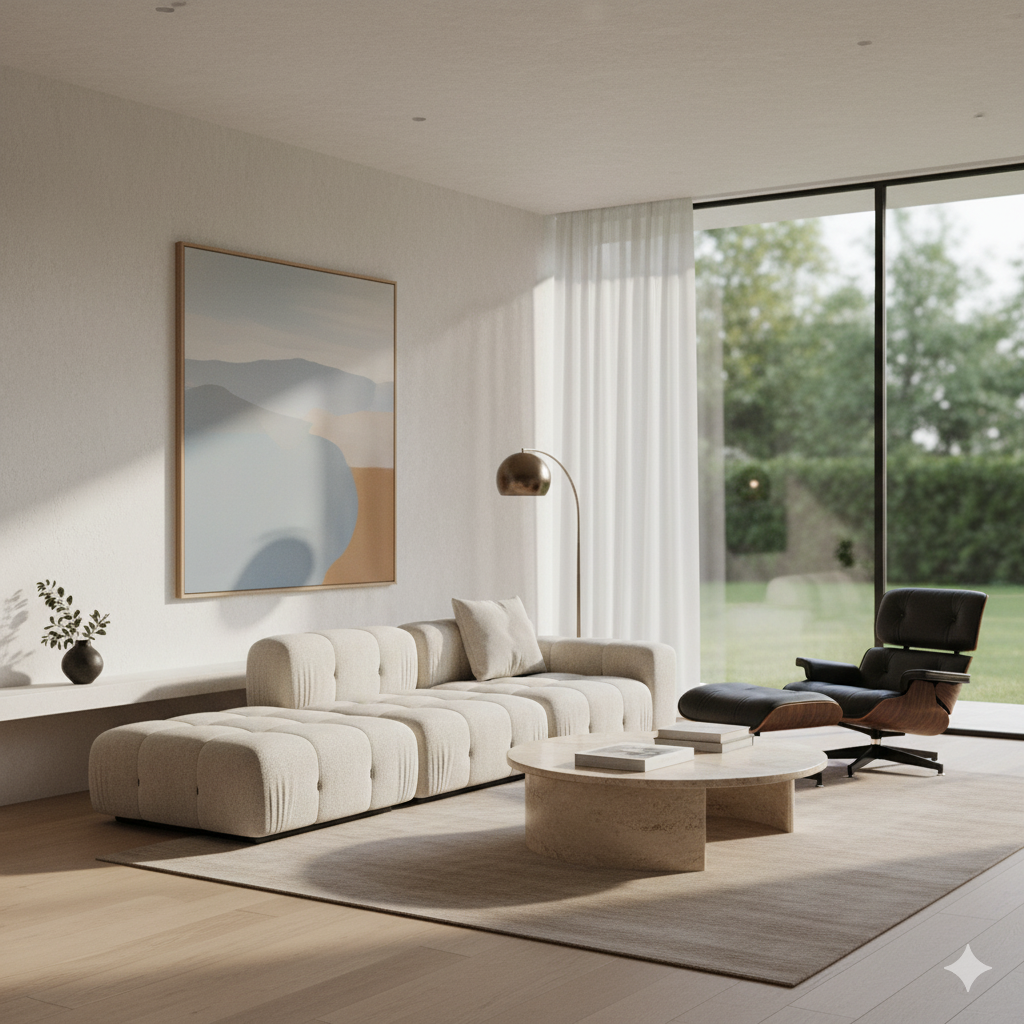
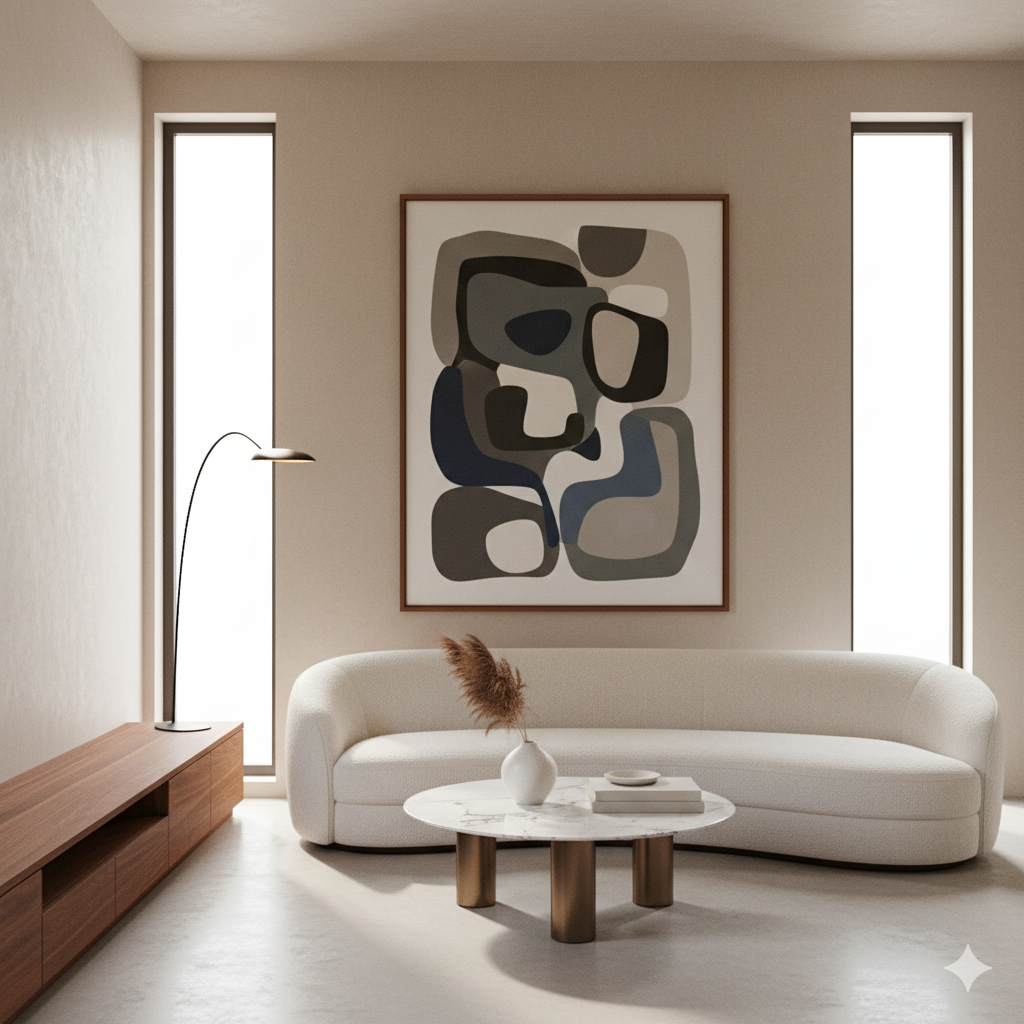
The Masterful Negative Space: In design, what you leave out is as important as what you put in. Negative space—the walls, the floor, the ceiling—is treated as a design element. It allows the eye to rest and highlights the few, meticulously curated items (a single piece of commissioned art, a statement lamp) as true investment pieces.
The True Cost of Clutter: A Cognitive Tax
The embrace of Minimalist Luxury is a rejection of consumer culture’s noise. This intentional design philosophy is a strategic move to optimize your environment for high performance. The visual simplicity inherent in Minimalist Luxury directly reduces the “cognitive load”—the amount of brain power spent processing environmental stimuli. Studies in environmental psychology consistently show that cluttered environments increase stress hormones and diminish the ability to focus.
To achieve an Apex Mindset, your personal space must be an ally, not a distraction. This is why the practice of Minimalist Luxury focuses on seamless integration of form and function. For instance, integrated storage solutions and bespoke cabinetry are not just aesthetic choices; they are functional investments that maintain the integrity of the negative space and uphold the principle of Absence of Clutter. Furthermore, the choice of high-quality, durable materials—the Material Integrity—ensures longevity, reducing the need for constant replacement, which itself is a drain on resources and attention.
Putting Minimalist Luxury into Practice
Transitioning to a philosophy of Minimalist Luxury is not an overnight purge but a gradual process of refinement. It begins not with buying, but with a strategic assessment of your current environment.
Start with a “Curation Audit.” Examine each object in a room and ask a simple question: Does this item serve a critical function, or does it possess exceptional artistic and personal value? This binary approach moves beyond simple tidying. It’s a disciplined exercise in intentionality, the very foundation of Minimalist Luxury. The goal isn’t emptiness, but to ensure that every single item that remains has earned its place, contributing positively to your environment and your mindset.
Anchor Your Space with a Statement Piece. Once the audit is complete, identify an “anchor” for your space. Instead of diffusing your budget across multiple mediocre items, invest in a single piece of exceptional quality—a beautifully crafted armchair, a solid wood dining table, or a commissioned piece of art. This anchor becomes the focal point, setting the standard for everything else. It’s the tangible proof of the one-in, ten-out philosophy that defines this aesthetic.
Master the Flow of Light. Finally, pay critical attention to light. Maximize natural light by removing heavy window coverings and treat light itself as a material. In Minimalist Luxury, lighting is not just for illumination; it is for sculpting space. A single, well-designed floor lamp can do more to define a corner than a dozen smaller objects, casting deliberate shadows and highlighting the texture of a nearby wall or the grain in a wooden floor.
The Investment Case for Less
Why is this a lasting trend? Because it is economically and psychologically sound:
- Enduring Value: Minimalist Luxury pieces are typically timeless designs (Eames, Le Corbusier, Noguchi). They appreciate, or at the very least, hold their value, acting as aesthetic commodities. For a deeper dive into making smart design choices, consider reviewing this article on The New York Times’ approach to collectible furniture as an investment.
- Cognitive Clarity: When you are surrounded by visual noise, your capacity for Apex Mindset is compromised. A curated, calm environment frees mental bandwidth for critical thinking and strategic planning.
The Apex of Design is ultimately the pursuit of a flawless execution of simplicity. It is the knowledge that the highest form of luxury is the feeling of uninterrupted calm. Understanding the subtle nuances of creating such a space is crucial. To complement further Knowledge and provide in-depth resources, review our related internal blog post on curated home aesthetic: 5 Mistakes to Avoid. Embracing Minimalist Luxury means you are not just decorating a space; you are designing a life of greater focus and refined quality.
2 thoughts on “The 3 Pillars of Minimalist Luxury: A Guide to Apex Design”