
Table of Contents
INTRODUCTION
Let’s cut through the noise about starting retinol—most advice out there misses the real reason beginners freak out about peeling, redness, and sensitivity. People blame the ingredient for being harsh, but the truth is that retinol isn’t the culprit. It’s how people start using it that messes things up. Retinol isn’t aggressive; it’s only the aggressive way people dive in that makes things go sideways. Because of that, tons of folks miss out on what’s actually the most proven, well-studied, and game-changing over-the-counter ingredient in skincare.
I want to make sure you don’t fall into that trap.
This guide is for anyone who’s spent months—or maybe years—wondering if now’s the time to try retinol but kept postponing it thanks to all the confusing and contradicting tips online. Using the highest concentration? Nope, that’s not it. Slapping it on every night from the very start? That’s not it either. Skipping moisturiser to “let the retinol work”? Big mistake. Honestly, misinformation about retinol is everywhere, and that’s exactly what I’m here to clear up. By the time you’re done with these eight steps, you’ll know how to start using retinol safely, which products to pick, how often to use them, and exactly what results to expect at 30 days, 60 days, and after that. No drama. No confusion. Just a straightforward, science-backed, beginner-friendly plan—so you can finally make what might be the biggest upgrade to your skincare routine.
Why Retinol Is Worth Every Beginner’s Effort
Let’s talk about why this ingredient is actually worth your time before you dive into the routine. Retinol, or Vitamin A, isn’t just another fad—it’s the one topical skincare ingredient backed by the strongest scientific evidence available. It speeds up cell turnover, boosts collagen, fades dark spots, shrinks pores, and tackles signs of ageing—all at once. The American Academy of Dermatology says you’ll see real changes in your skin’s texture, tone, and firmness after just 12 weeks if you stick with it. Keep using it for 6 to 12 months, and the results get even better.
Honestly, nothing you can buy without a prescription matches retinol’s track record. Vitamin C, niacinamide, and peptides—they’re all great, and I cover them in detail elsewhere in the Apex Beauty collection, but retinol is the gold standard. Getting started doesn’t take much effort; it’s about as simple as reading this post.
The One Reason Most Beginners Struggle
The vast majority of retinol horror stories come from one mistake: starting too strong, too fast. The skin needs time to build tolerance to retinol—a process called “retinization”—and rushing it produces the irritation, flaking, and redness that have given this ingredient its undeserved reputation.
The correct approach is not about finding the perfect product. It is about finding the right pace.
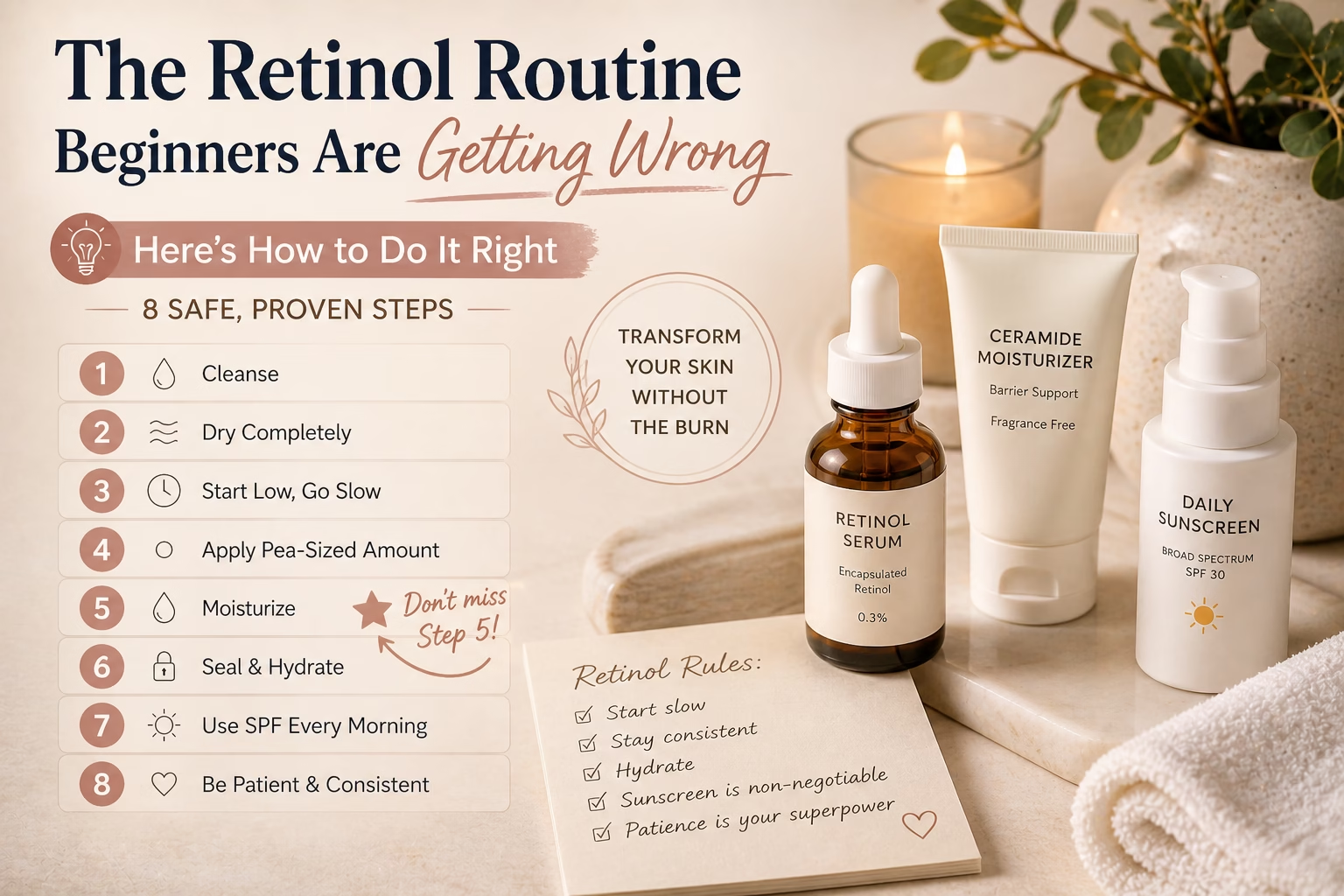
The 8-Step Retinol Routine for Beginners
Step 1—Start at the Lowest Possible Concentration
If you’re just stepping into the world of retinol, keep it simple: start with 0.025% or 0.03%. Forget about 0.1%, 0.3%, or anything higher for now. Dermatologists always say it’s smarter to choose a gentle enough level that actually helps your skin, not one that just leaves you red and peeling. There’s no prize for jumping in too fast and giving up because your face can’t handle it.
It’s a lot like running. You wouldn’t sign up for a half-marathon as your first jog. You start with 20 minutes, see how it feels, and slowly work your way up. Retinol’s the same—go slow and let your skin build tolerance.
Here’s what you want to spot on the label:
• 0.025% retinol is the mildest choice, perfect if your skin runs sensitive or tends to feel dry.
• 0.05% retinol suits most people with normal or combo skin, as long as you haven’t dealt with irritation before.
• Retinaldehyde (also called retinal) is a notch stronger than standard retinol—closer to prescription strength and works faster even in small amounts, but is still gentle for most folks. Great if regular retinol just isn’t making a difference. Skip prescription-strength tretinoin right out of the gate. It’s powerful stuff, needs a doctor’s watchful eye, and usually causes a rough adjustment period that most beginners just aren’t ready for.
Step 2: Always Apply Retinol on Dry Skin—not Damp
Honestly, this is where most people mess up and end up with irritated skin. If you put retinol on damp skin, you’re asking for trouble. Damp skin lets the active ingredient sink in way faster, and that sounds good, but actually, it’s way more than your skin can handle at once. That triggers redness, peeling, and all those classic retinol reactions.
So, play it safe—after washing your face, wait a good 3 to 5 minutes. Pat it dry, then check: your skin shouldn’t just look dry; it should actually feel dry. That little change makes a huge difference, especially in your first month or so.
Step 3—Begin With the Sandwich Method
If you want retinol to go easy on your skin right from the start, sandwich it. The method’s pretty straightforward: you layer some moisturiser before and after retinol. Not enough people use it, but it works wonders.
Here’s how:
- Cleanse and dry your face—really dry.
- Put a light layer of plain, fragrance-free moisturiser on your face and neck.
- Wait about a minute for it to soak in.
- Use a pea-sized amount of retinol (seriously, you don’t need more).
- Let it absorb for a couple of minutes.
- Finish with another layer of moisturiser.
The first moisturiser slows retinol down so it’s less harsh. The last layer locks in hydration and calms things. If your skin’s dry or sensitive, this method helps a ton—and yeah, the results are just a bit slower, but you’ll thank yourself later.
Step 4—Stick to the 1-2-3 Frequency Rule
Now, about how often: This is where beginners get frustrated. Using retinol every night right from the jump almost guarantees irritation. Then the skin freaks out, and people quit just before they see real results.
Ease in with the 1-2-3 rule:
| Phase | Frequency | Duration | What to Expect |
| Phase 1 | Every 3rd night | Weeks 1–2 | Minimal reaction; gentle introduction |
| Phase 2 | Every other night | Weeks 3–5 | Possible mild flaking; skin adapting |
| Phase 3 | Every night (or near-nightly) | Week 6 onward | Skin fully tolerant; full benefits engaged |
If your skin’s dry or super sensitive, hang out in each phase longer. Watch your skin, not your calendar. If you see redness or flaking early, wait before bumping up the frequency. No rush.
Step 5 — Never Mix Retinol With These Ingredients on the Same Night (Don’t Miss This)
This next part is make-or-break. Some product combos can seriously wreck your skin barrier. You have to know what not to pair with retinol.
Never mix retinol with:
- AHAs/BHAs (glycolic, lactic, salicylic acids): Acid exfoliants plus retinol is a recipe for irritation. Alternate nights.
- Vitamin C (L-Ascorbic Acid): The low pH cancels out retinol, plus it’s tough on reactive skin. Save vitamin C for mornings.
- Benzoyl peroxide: It just kills retinol’s effects—don’t use these together.
What works well with retinol: - Niacinamide (after retinol sinks in—helps with redness).
- Hyaluronic acid (use before retinol on damp skin to pre-hydrate).
- Ceramide-heavy moisturisers (use both before and after for the sandwich method).
- Peptide serums (apply after retinol—they boost collagen, retinol’s main job).
Step 6 — Understanding Retinol Purging vs. Breakout
If you start using retinol and suddenly get more breakouts, don’t panic. This purge phase happens mostly between weeks 2 and 6 if you usually get clogged pores or mild acne. What’s happening? Retinol speeds up cell turnover, pushing everything to the surface, so stuff that would have taken months to show up comes out faster.
Here’s how to tell:
– Purging happens where you usually break out. It clears up in 4–6 weeks once you stick with it.
– A true bad reaction pops up in new spots, gets worse over time, and comes with redness, burning, or skin barrier issues.
If it’s purging, dial back how often you use retinol and bump up moisturiser, but keep going. If it’s a genuine reaction, stop retinol and focus on repairing your barrier—check out a skin barrier repair routine if you need one.
The key distinction between purging and a true breakout reaction:
Purging appears primarily in areas where you already experience breakouts (your usual congestion zones). It clears within 4–6 weeks of consistent use. A true skin reaction—meaning retinol is genuinely not suitable for your skin—appears in new areas, worsens over time rather than improving, and is accompanied by persistent redness, burning, or barrier disruption. If you are experiencing what you believe is purging, reduce your frequency briefly, increase your moisturization, and continue. If you are experiencing a true reaction, stop retinol and allow your skin barrier to recover using the protocol in our detailed guide on skin barrier repair routine steps.
Step 7 — Wear SPF Every Single Morning Without Exception
Retinol makes your skin a magnet for UV damage. If you skip sunscreen, you’ll undo all the anti-ageing gains you’re making at night, and sunlight will break down the collagen retinol worked so hard to build.
SPF 50 is the bare minimum if you’re using retinol. Don’t negotiate on this. Haven’t nailed your morning SPF routine yet? Try guides for glass skin or glowing skin—they’ll get you sorted.
If you have not yet built a solid morning SPF habit, our guide on a glass skin routine for dry skin and the complete night skincare routine for glowing skin both contain detailed SPF frameworks that work seamlessly alongside a retinol practice.
Step 8—The Bakuchiol Alternative for Sensitive Skin
If retinol just doesn’t agree with your skin, don’t force it. Bakuchiol is extracted from the Psoralea corylifolia plant, which has demonstrated comparable retinol-like results in two peer-reviewed clinical trials published in the British Journal of Dermatology. Bakuchiol is a plant-based alternative that, according to studies, works pretty similarly to retinol, improving lines, pigmentation, firmness, and skin texture, but with way less irritation and stinging.
It’s not about which is “better”—it’s what your skin can handle. Most folks find retinol stronger, but if you have rosacea, eczema, or just can’t tolerate retinol, bakuchiol’s a solid substitute. You can use it every night right from the get-go, with none of the slow ramp-up retinol needs. Bakuchiol and retinol aren’t really a battle over which one’s better—it’s more about what your skin can handle. Retinol packs more punch, especially at clinical levels, and most people notice stronger results. But if you deal with rosacea, have eczema-prone skin, or you just can’t tolerate retinol, bakuchiol steps in as a solid option. You can use it every night right away; there’s no need to tiptoe around its usage like you have to with retinol.
Retinol Results — What to Really Expect and When
People often give up on retinol too soon because they’re hoping for big changes in just a couple of weeks. The truth is, skin just doesn’t work that way. Real results take time—retinol is all about patience.
Here’s what you can actually expect as you go:
Weeks 1–4: At first, your skin is just getting used to everything. You might deal with dryness, maybe some flaking around your mouth or nose, and if your pores get clogged easily, a bit of purging. Honestly, you probably won’t see much improvement yet. This stage lays the groundwork.
Weeks 5–8: By now, your skin will have adjusted. You’ll start feeling it getting smoother. Texture is usually the first thing to shift—skin feels softer, fresher, and looks a little less tired, especially in daylight.
Months 3–4: This is when things get exciting. Dark spots start to fade. Fine lines look less harsh. Pores look smaller. Your skin has a quiet glow—a kind of healthy brightness you’ll definitely notice in the mirror.
Months 6–12: This is the real payoff. Your skin looks firmer; everything feels more even and luminous. People might even start asking what’s changed, though they can’t quite put their finger on it. That’s the deal with retinol. It’s not a sprint. It’s really about playing the long game—and in the end, the results completely outshine any quick fix.
The Complete Beginner’s Retinol Routine — Evening Schedule
To bring all 8 steps together into a single practical framework:
Evening Retinol Routine (Full):
Start with a gentle double cleanse. First, use an oil cleanser to lift off your SPF (you’re wearing sunscreen in the mornings now—good job). Follow that with a mild, water-based cleanser. Dry your skin completely. Next, smooth on a thin layer of moisturiser and let it sink in for about 90 seconds. Now, add a pea-sized dab of retinol (stick to 0.025–0.05%) and leave it alone for two minutes. When your skin feels dry again, finish with a generous layer of moisturiser over everything. If you’re using a niacinamide serum, wait until the retinol sinks in, then pat that on.
That’s it. The whole process takes around twelve to fifteen minutes. No need to obsess—just be consistent. On the nights you skip retinol (which, in the early stages, will be every other night), switch out the retinol step for an AHA toner or BHA exfoliant. This way, your skin keeps making progress without getting overwhelmed.
Frequently Asked Questions About Retinol for Beginners
Can I use retinol every night right away?
Don’t jump in every night. Even if your skin doesn’t react immediately, starting off with nightly use won’t speed things up. What you actually need is time for your skin to adjust so you avoid irritation. Try starting every third night and then slowly increase how often you use it.
How long should I use retinol before seeing results?
Give it around 12 weeks before judging if it’s working. Expecting clear results in about 8 weeks is like planting a tree and looking for fruit right away. A lot happens below the surface before you see any changes.
Does retinol thin the skin?
That’s a common myth. Used right, retinol doesn’t thin your skin. It does speed up cell turnover, which means the dead outer layer can get a bit thinner at first, but at the same time, your skin actually builds more collagen underneath. Over time, this boosts your skin’s structure, not weakens it.
Can beginners with sensitive skin use retinol?
Absolutely, but they need to start slow. Go for a gentle concentration, like 0.025%. Try the sandwich method (layering moisturiser before and after) and use it just a couple of times a week. Bakuchiol is a good alternative or starter, too. Lots of people with sensitive skin manage retinol eventually—they just need more patience.
Is retinol safe during pregnancy or breastfeeding?
No, it’s not safe. Avoid all topical retinoids, including regular retinol, if you’re pregnant or breastfeeding. Bakuchiol is a safer alternative for this time. And honestly, check with your healthcare provider for advice that fits your situation.
CONCLUSION
Starting a retinol routine isn’t as tricky as people make it sound. There are just eight simple steps: pick a mild concentration—0.025% is a good place to start—use a tiny, pea-sized amount, and let your skin adjust at its own pace. Retinol is an unbelievable ingredient. Your only real responsibility is to introduce it gently and then let it work its magic. Dermatologists have spent decades proving what this stuff can do.
Go slow. Stick to it. Don’t skip SPF in the morning—your skin needs that protection. Just let retinol build up its effect night after night. One morning, you’ll catch a glimpse in the mirror and realize your skin actually looks different. It’s a real surprise.
That day does arrive. All you need is the patience to let it happen.
Watch: For a brilliant visual guide to understanding retinol percentages and the retinization process, Dr. Sam Bunting’s YouTube channel provides the most accessible, clinically grounded free retinol education available.
Explore the full Apex Beauty & Wellness collection for science-backed, genuinely human guides to every dimension of your most radiant self—from your first retinol application to your full glass skin ritual.
- Skin Barrier Repair Routine Steps
- Glass Skin Routine for Dry Skin
- Night Skincare Routine for Glowing Skin
- Dark Academia Room Decor Ideas
- How to Build Confidence Daily