
Table of Contents
INTRODUCTION
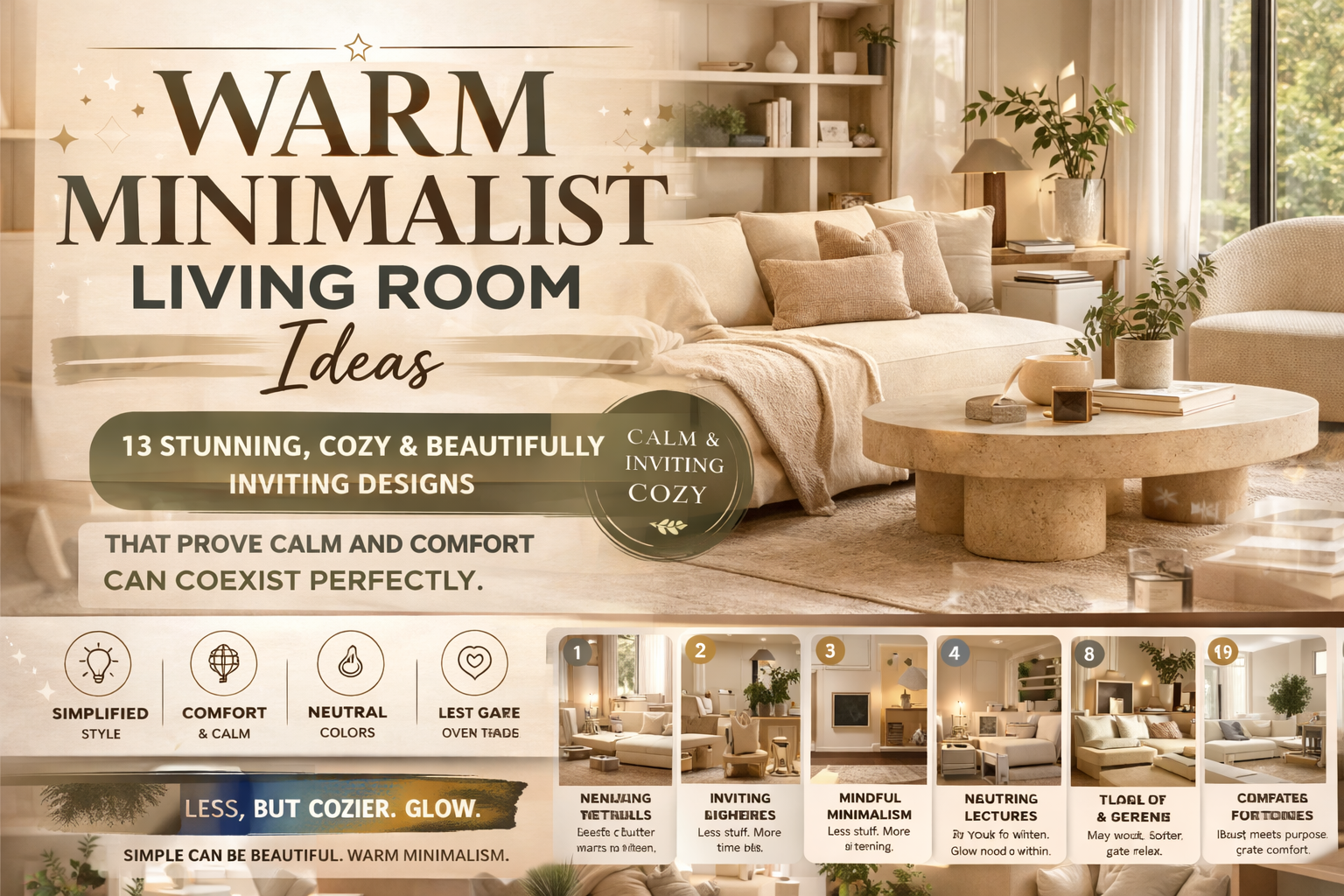
The best warm minimalist living room ideas resolve the false choice that has frustrated homeowners for a decade: the belief that you must choose between a space that is beautiful and ordered or a space that is cosy and inviting—but never both simultaneously. Cold minimalism, as it was practised through the 2010s, delivered on order and visual calm but failed catastrophically at warmth. Spaces of stark white, grey concrete, and empty surfaces were photogenic but not livable—rooms that looked extraordinary in architectural photography and felt deeply uncomfortable to actually inhabit.
The design intelligence of 2026 has corrected this. Every major interior trend forecast—from the Pinterest Predicts report to Architectural Digest’s annual design survey to Pantone’s Colour of the Year (Mocha Mousse)—confirms the same decisive shift: warm minimalism is replacing cold minimalism as the defining residential aesthetic of the decade. The principles remain fundamentally minimalist—restraint, intentionality, negative space, quality over quantity—but the material palette has shifted dramatically toward warmth, texture, organic form, and the kind of sensory richness that makes a beautiful room feel genuinely good to be in.
At Apex Aesthetic, warm minimalism is not new territory—it is the philosophy we have always embodied. In this guide, we present 13 warm minimalist living room ideas that are simultaneously elegantly restrained and deeply inviting—spaces where every element is deliberate, every material is natural, and the cumulative effect is the rare and extraordinary room that is both stunning to look at and wonderful to live within.
What Makes a Living Room “Warm Minimalist”: Defining the Design Philosophy
“Warm minimalism” is defined by the intersection of two principles that, in lesser design, often oppose each other: the minimalist commitment to reduction, intention, and visual calm and the warmth imperative of natural materials, layered texture, and emotional resonance. When these principles are balanced correctly, the result is the most sophisticated living room aesthetic available in contemporary interior design.
Cold Minimalism vs. Warm Minimalism — The Key Differences
| Element | Cold Minimalism | Warm Minimalism |
| Color palette | Stark white, cool grey, black | Warm white, cream, sand, terracotta |
| Materials | Concrete, glass, chrome, polished stone | Wood, linen, wool, ceramic, rattan |
| Texture | Flat, smooth, reflective surfaces | Layered: woven, nubby, grain, pile |
| Lighting | Cool white LEDs, maximum illumination | Warm white (2700K), layered, dimmable |
| Plants | Absent or architectural | Present as natural focal points |
| Feel on entry | Impressive but cold | Beautiful and immediately welcoming |
| 2026 trend status | Declining | Dominant and accelerating |
According to the Pantone Colour Institute’s 2026 Colour of the Year announcement, the selection of Mocha Mousse—a sophisticated warm brown—explicitly signals the cultural shift toward “comfort, indulgence, and connection to nature” as the primary drivers of contemporary interior design. Warm minimalism is not following this trend; it is its fullest expression.
13 Stunning Warm Minimalist Living Room Ideas
1 — Build Your Palette Around Three Warm Neutrals Only
The palette is the most foundational decision in any warm, minimalist living room—and the word “warm” is doing significant work here. The warm minimalist palette is not simply “neutrals”—it is specifically the warm end of the neutral spectrum, where undertones shift from cool (blue, grey, and green) to warm (yellow, orange, brown, and red).
The Apex Warm Minimalist Palette Formula:
- Primary (60% of visual space — walls, large sofa, flooring): Warm white (slightly yellow or cream-toned), warm greige, sand, ivory, or natural plaster
- Secondary (30% — accent furniture, secondary textiles, wood tones): Natural oak or walnut, warm taupe, camel, linen, raw cotton
- Accent (10% — single statement piece, cushions, small objects): Terracotta, warm sage, deep clay, dusty rose, Mocha Mousse, or deep forest green
The rule is strict: all three palette tiers must have warm undertones. A single cool-toned element—a pale blue cushion, a cool grey concrete side table, or a chrome lamp—breaks the tonal coherence that makes warm minimalism feel cohesive rather than merely colour-restrained.
2 — Choose a Low-Profile Sofa in Natural Linen or Boucle Fabric
The sofa is the largest furniture piece in any living room and the primary carrier of the warm minimalist aesthetic—both materially and proportionally. In warm minimalist living rooms, the sofa has two defining characteristics: a low, grounded profile (drawing the eye downward and making the ceiling feel taller) and an honest, natural fabric that ages beautifully.
The Apex Warm Minimalist Sofa Criteria:
- Fabric: Natural linen (the warm minimalist signature textile), cotton bouclé (the most on-trend option for 2026), or high-quality upholstered performance velvet in a warm neutral
- Colour: Warm cream, warm greige, oatmeal, sand, or a single warm accent colour (terracotta, sage, warm blush)
- Profile: Low — seat height of 38–42cm rather than the standard 45–48cm of most Western sofas. Lower seats create a more grounded, relaxed visual rhythm
- Form: Simple, clean lines without excessive decorative detail—the fabric and colour carry the aesthetic; the form supports them without competing
Budget options: IKEA SÖDERHAMN (reconfigurable, low profile, linen-compatible covers), Article Sven, or Floyd Sofa all offer genuinely warm, minimalist proportions at accessible price points.
3 — Ground the Room With a Generous Natural Fibre Rug
A rug in a warm minimalist living room performs three simultaneous functions: it grounds the furniture arrangement into a cohesive visual zone, adds the most important tactile texture to the room’s floor plane, and introduces natural material that reinforces the warm minimalist material philosophy.
Natural Fibre Rug Selection for Warm Minimalist Living Rooms:
| Fiber Type | Texture | Best For | Price Range |
| Jute | Rough, natural, earthy | Maximum natural character | $60–$250 |
| Sisal | Slightly smoother, durable | High-traffic living rooms | $80–$300 |
| Wool | Soft, luxurious, durable | Maximum comfort underfoot | $150–$600 |
| Seagrass | Woven, tight, firm | Clean, structured aesthetic | $70–$250 |
| Cotton flatweave | Soft, lightweight | Layering over jute base | $50–$150 |
Scale is everything: A rug that is too small makes the room’s furniture appear to float disconnectedly. In any living room, the rug should be large enough that all primary seating furniture sits with at least its front legs on the rug. When in doubt, go larger—the most common rug mistake is undersizing it.
4 — Choose Warm Wood as the Living Room’s Structural Material
Natural wood in warm-toned varieties—aged oak, walnut, teak, mango, and sheesham—is the structural material of the warm minimalist living room. Where cold minimalism avoided wood or used it in pale, barely-there forms, warm minimalism celebrates it: as coffee tables, side tables, shelving, cabinet panels, window frames, and statement furniture pieces.
Wood Selection for Maximum Warm Minimalist Impact:
- Aged oak (warm honey-gold): The most universally versatile warm minimalist wood—works across every palette from cream to terracotta to forest green
- Walnut (deep, warm brown): The most sophisticated option, particularly beautiful with cream and warm white upholstery
- Mango wood (varied warm grain): Characterful, sustainable, accessible — widely available through ethical furniture retailers at excellent price points
- Teak (golden-brown with strong grain): Warmth with a tropical note—bridges warm minimalism and natural material in a particularly confident way
The warm minimalist wood surface rule: leave wood surfaces as natural as possible—lightly oiled or wax-finished rather than high-gloss lacquered. The natural grain and organic variation of unlacquered wood is the material detail that distinguishes a genuinely warm minimalist room from a merely wood-toned one.
5 — Layer Textiles for the “Cozy Minimalist” Effect
The warmth in warm minimalism comes substantially from textiles—the layering of different natural fabric textures that creates a sense of physical comfort and visual depth that no amount of paint or furniture selection can replicate. This textile layering is the most immediately impactful and most budget-accessible warm minimalist upgrade available.
The Apex Warm Minimalist Textile Layering System:
Layer 1 — The Sofa Base: Your chosen sofa fabric (linen or bouclé) is the foundation. Add 2–3 cushions in complementary textures and slightly contrasting tones within your palette.
Layer 2—The Throw: One generously sized throw—cashmere, chunky-knit wool, or woven cotton—is draped casually over one sofa arm or folded over the cushions. This single addition transforms a sofa from furniture to a destination.
Layer 3 — The Rug (as discussed above): The floor textile that grounds the entire arrangement.
Layer 4—Window Textiles: Sheer linen curtains in warm white or ivory, hung from ceiling height, create the characteristic warm minimalist window treatment—filtering light rather than blocking it and adding material warmth without visual weight.
Layer 5—Small textiles: A linen-covered ottoman, a woven storage basket, a textured cushion on a side chair—micro-textile details that create richness without accumulation.
6 — Use Warm, Layered Lighting to Define the Space’s Atmosphere
Lighting is the invisible architecture of the warm minimalist living room—and it is the element most responsible for whether the space feels cold and clinical or warm and genuinely inviting. The most impactful and least expensive warm minimalist upgrade available is the replacement of cool-white overhead lighting with warm-white, dimmable, layered light sources.
The Apex Warm Minimalist Living Room Lighting Blueprint:
Ambient Layer (Warm White LED, 2700K maximum): All overhead bulbs were replaced with 2700K warm white LEDs on a dimmer circuit. Dimming overhead ambient light to 40–60% brightness in the evening produces the most transformative atmospheric shift available in any living room—costing less than the dimmer switch itself.
Feature Layer (Natural Material Pendant or Floor Lamp): A rattan, bamboo, ceramic, or linen-shaded pendant light over the coffee table creates the most powerful design anchor in the warm, minimalist living room. Alternatively, a sculptural floor lamp positioned beside the sofa creates a reading and atmospheric source simultaneously.
Accent Layer (Candles and Small Table Lamps): Three to five small lamps, candles, or LED flame candles positioned throughout the room at varying heights—creating pools of warm light that give the space dimensional depth and the intimate, welcoming atmosphere that overhead lighting can never achieve.
7 — Introduce Statement Plants With Architectural Presence
Plants in the warm, minimalist living room are not incidental—they are structural. The organic form, natural colour, and living quality of a well-chosen plant introduce a biophilic warmth that no purchased object can replicate, and in a deliberately restrained space, a single statement plant carries enormous visual weight.
The Apex Warm Minimalist Living Room Plant Selection:
- Fiddle Leaf Fig (Ficus lyrata): The defining statement plant of the warm minimalist aesthetic—architectural, dramatic, and deeply photogenic. Position in a large, simple terracotta or matt-ceramic pot
- Olive Tree (Olea europaea, indoor): A deeply Mediterranean warmth—silver-green leaves, gnarled trunk, deeply characteristic. The most sophisticated living room plant available
- Monstera Deliciosa: Large, sculptural leaves with a distinctly tropical organic form—create immediate visual drama in understated spaces
- Areca Palm: A cascade of warm, feathery fronds that introduces tropical warmth and movement to still spaces
- Large Sansevieria (Snake Plant, architectural format): Vertical, structural, nearly indestructible—in a very large pot, becomes a genuine architectural element
Position your primary statement plant in the room’s most visually empty corner—the deliberate emptiness of warm minimalism makes corners the ideal plant location, where organic form and bare walls create a natural composition.
8 — Select Art That Communicates Warmth and Intention
In a warm minimalist living room, art is the room’s primary narrative element—the single most personalised design choice available and the one that most powerfully distinguishes a curated space from an assembled one. The warm minimalist approach to art is singular and confident: one or two significant works, given the visual space they deserve, rather than a gallery of many competing pieces.
Warm Minimalist Art That Works:
- Abstract works in the room’s warm palette: Sand, terracotta, burnt orange, warm ochre, deep forest green—abstract canvases in warm tones carry the room’s colour story and add intellectual texture without visual narrative clutter
- Landscape photography in warm tones: Large-format prints of natural landscapes—deserts, mountains at golden hour, forest light—communicate the biophilic warmth and natural material story of the entire room
- Organic ceramic sculpture: A hand-thrown ceramic bowl, vase, or sculptural piece on a shelf or side table doubles as both art and a functional object—the epitome of warm minimalist aesthetic philosophy
- Vintage botanical prints: Warm-toned, naturally organic, and deeply timeless—framed in natural wood or raw linen mounts, botanical prints are an affordable and characterful warm minimalist art choice
9 — Design a Coffee Table Moment That Anchors the Room
The coffee table vignette—the styled arrangement on and around the room’s central furniture piece—is the living room’s editorial detail, and in a warm minimalist space, it must be executed with absolute precision. Too many objects and the space reads as cluttered; too few and it reads as unfinished.
The Apex Coffee Table Vignette Formula:
Your coffee table should hold a maximum of five objects, arranged with awareness of the following:
- One tall element: A small candle in a ceramic vessel, a bud vase with a single stem, a small sculptural object
- One horizontal element: A beautifully covered coffee table book in your palette’s accent colour, face up
- One natural element: A small plant, a smooth river stone, a piece of dried botanicals
- One functional element: A coaster, a small tray to anchor the arrangement, and a remote control with a beautiful case
- Negative space: At least 40% of the coffee table surface should remain visible, empty, and deliberately so
The negative space is not empty—it is a calm space. It is the visual pause that makes every styled element around it more present and more beautiful.
10 — Embrace Biophilic Details: Natural Material Throughout
The warm minimalist living room draws its distinctive warmth not from any single design decision but from the cumulative effect of natural materials present at every scale—from the largest furniture to the smallest accessory.
A Warm Minimalist Natural Material Checklist:
- [ ] Solid wood or natural stone coffee table
- [ ] Natural fibre rug (jute, sisal, wool)
- [ ] Linen or bouclé upholstery on primary seating
- [ ] Natural fibre cushion covers (linen, cotton, woven)
- [ ] One statement plant in a natural material pot (terracotta, ceramic, stone)
- [ ] Wooden or ceramic decorative objects (no plastic accessories visible)
- [ ] Natural material candle vessels (ceramic, terracotta, glass)
- [ ] Woven storage basket (a natural fibre object that solves storage while adding texture)
The principle at work here is material honesty—every material in the room should be what it appears to be. Plastic that looks like wood, synthetic fabric that imitates linen, vinyl flooring that mimics stone — these substitutions undermine the warm minimalist aesthetic at a neurological level. The human nervous system is remarkably sensitive to material authenticity.
11 — Create a Dedicated Reading or Relaxation Corner
The most lived-in warm minimalist living rooms have a secondary zone—distinct from the main sofa grouping—dedicated to individual relaxation, reading, or quiet presence. This corner communicates something important about the room and the person who designed it: that the space is for living in, not simply for presenting.
Creating the Warm Minimalist Reading Corner:
- An armchair in natural linen or bouclé — proportionally smaller than the sofa, creating comfortable asymmetry
- A small wooden side table at arm height for a cup of tea and a book
- A floor lamp providing warm, directional reading light — a sculptural ceramic or rattan base preferred
- A small footstool or ottoman for extended comfort
- One personal, intentional detail — a stack of carefully chosen books, a small framed photograph, a single meaningful object
12 — Manage Storage With Concealment and Aesthetic Intelligence
Warm minimalism maintains its visual calm through disciplined storage — ensuring that everything that serves a function but lacks aesthetic value is invisible. This does not mean you own less (though that helps); it means what you own has a designed, concealed home.
Warm Minimalist Storage Solutions for Living Rooms:
- Closed credenzas or sideboards: Solid wood with flush-panel doors—conceals media equipment, gaming consoles, cables, and general living room clutter behind beautiful, uninterrupted wood surfaces
- Woven baskets with lids: Natural material storage that is beautiful when visible, useful when needed — the warm minimalist alternative to plastic storage bins
- Built-in shelving with closed lower sections: Upper open shelves for curated display; lower closed cabinets for everything else
- Ottoman with storage: The coffee table alternative that provides the warm, minimalist coffee table vignette space above while concealing blankets, remotes, and small items below
For the complete Apex framework on creating storage solutions that are both functionally brilliant and aesthetically beautiful, our guide on quiet luxury home decor ideas provides detailed guidance that applies directly to the warm, minimalist living room context.
13 — Bring the Outdoors In: Scent, Sound, and Sensory Warmth
The final warm minimalist living room idea is one that most design guides overlook entirely because it cannot be photographed: the deliberate introduction of sensory warmth through scent, sound, and tactile experience. The most extraordinary warm minimalist living rooms engage all five senses—and the last two (scent and sound) are the ones that most powerfully communicate the room’s warmth to anyone who enters them.
The Apex Warm Minimalist Sensory Design:
- Scent: A reed diffuser or high-quality candle in warm, natural fragrance—sandalwood, cedar, warm vanilla, amber, or beeswax—creates an invisible but powerfully felt warmth that photographs can never convey
- Sound: The considered absence of intrusive noise—soft background music (acoustic, jazz, classical, or ambient) at low volume or simple silence—is a design element in warm minimalist spaces. The acoustic environment of the room should be as considered as its visual one
Tactile warmth: blankets that actually feel as extraordinary as they look; cushion fabrics that reward touch; a rug that feels genuinely luxurious underfoot rather than functional. Warm minimalism is a philosophy that the body should experience as deeply as the eye
Warm Minimalist Living Room — Budget Guide by Element
| Element | Budget Option | Mid-Range | Investment |
| Sofa (linen/bouclé) | $400–$800 IKEA, Article | $800–$1,800, Floyd, Interior Define | $2,000–$5,000+ |
| Rug (natural fiber) | $60–$150 IKEA, Amazon | $150–$400 Ruggable, Loloi | $400–$1,200 Restoration Hardware |
| Coffee table (wood) | $80–$200: IKEA, Wayfair | $200–$600 Article, CB2 | $600–$2,000+ |
| Lighting (floor/pendant) | $30–$100: IKEA, Target | $100–$350 West Elm, CB2 | $350–$1,500+ |
| Art (one statement) | $20–$80 DIY/Etsy print | $80–$300 original print | $300–$2,000+ original |
| Plants + pots | $30–$80 | $80–$200 | $200–$500 |
| Textiles (cushions/throw) | $40–$100 H&M Home, IKEA | $100–$300 | $300–$800 Bemboka, Mungo |
Frequently Asked Questions
Is warm minimalism the same as the Japandi style?
They share significant DNA – both prioritise natural materials, warm neutrals, and intentional simplicity – but warm minimalism is broader. Japandi is the specific Japanese-Scandinavian fusion style with its own distinctive material vocabulary (wabi-sabi aesthetics, Japanese craftsmanship tradition, and Scandinavian hygge). Warm minimalism is a design philosophy that Japandi expresses beautifully, but that also includes other aesthetic traditions like quiet luxury, earthy modernism, and Mediterranean minimalism. For a deep dive into the Japandi expression of warm minimalism, our guide on Japandi bedroom ideas on a budget translates these same principles to the bedroom.
What is the most important element in a warm minimalist living room?
Lighting, without question. The most perfectly chosen furniture and materials will feel cold and unwelcoming under harsh, cool-toned overhead lighting. Conversely, modestly furnished rooms with warm, dimmable, layered lighting feel genuinely inviting and beautifully curated. If you can only change one element of your living room tonight, replace all bulbs with warm white (2700K) and put them on a dimmer.
Can a small living room be warm and minimalist?
Small living rooms are ideally suited to warm minimalism. The philosophy’s commitment to restraint, visual breathing room, and quality over quantity produces spaces that feel larger, calmer, and more intentional than equivalent-sized rooms furnished with more pieces. Warm minimalism respects small spaces rather than trying to compensate for them with visual density.
CONCLUSION
Warm minimalist living room ideas are ultimately the design expression of a single, powerful truth: that beauty and comfort are not a trade-off but a collaboration — and that the rooms we return to with the most genuine pleasure are those where both principles are honoured with equal care. The cold minimalism of the past decade asked you to choose beauty over comfort. Warm minimalism refuses that choice and delivers both.
Design your living room as a space that is genuinely beautiful to look at and deeply pleasurable to inhabit. Begin with your palette. Add one layer of natural textile. Replace your light bulbs with warm white and dim the overhead circuit. These three changes alone will begin the transformation.
The room you have always wanted — calm, warm, beautiful, and entirely yours — begins with the next decision you make within it.
OUTBOUND LINKS
- Pantone Color Institute 2026 — https://www.pantone.com/color-of-the-year/2026
Если всякий планирует тур в Испанию, особенно актуален, как перебраться из воздушной гавани Мадрида в центральный район, рекомендую рассмотреть на метро и автобусный транспорт — это практично и ощутимо недорого. Для людей, кто еще не выбрал направление, не помешает изучить замечательные города Испании у берега, например, Малага или северные районы Испании города, где можно восхититься ландшафтами и постройками. Ценовой уровень на продовольствие в Испании в 2025 году продолжают быть достаточно разумными, что станет плюсом, тем более если планируете готовить своими руками. Детальнее о транспортных маршрутах и ценах можно прочитать ниже: [url=https://ispaniagid-top.ru/]порт авентура[/url] .
Еще один замечательный пункт назначения — Канарские острова, прежде всего Тенерифе, где занимательные маршруты, например, Teneriffa bus 343 fahrplan, и много, что увидеть и чем заняться. Для поклонников истории и мероприятий полезно знать, что к примеру, карнавальные мероприятия на Тенерифе 2025 гарантируют огромное количество эмоций. А всем тем, кто едет в Валенсию, пригодятся советы про walencja komunikacja miejska или metro walencja bilety, чтобы свободно разобраться в городе и экономить на транспорте.
Разрабатывая тур по итальянским местам, зачастую появляется вопрос: что посмотреть в Венеции за 1 день и как выстроить разумный маршрут по знаменитому городу. Для тех, кто собирается не только прогуляться по площади Венеции и Санта Мария ин Арачели, но и узнать цену гондолы в Венеции и типы пешеходных прогулок, нужно до поездки ознакомиться с карту города и советы по по экономии времени. Если вы ищете маршрут по Венеции на 1 день с расчетом главных мест и советами, узнайте больше здесь [url=https://holidaygid-italy.ru/]площадь венеции[/url] .
Кроме Венеции, не забудьте уделить внимание на великолепную Флоренцию — во Флоренции за 1 день успеть осмотреть важнейшие места, а также охватить аутлет Флоренция или оценить пешеходным маршрутом по городу. Тем, кто задумывает трип по Доломитовым Альпам на авто, стоит заранее узнать, как приехать и продумать маршрут, чтобы осмотреть всё. При такой интересной программе Италия оставит незабываемые воспоминания!
If you’re considering to reserve moto de agua Tenerife or seeking for hire options around the location, there are a variety of locations to explore, especially in Tenerife Sur and Los Gigantes. Tariffs tend to vary depending on the destination and booking, so it’s a good idea to compare multiple options before committing. For those wanting a bit more adventure, there are also several of jet ski tours and safaris accessible, such as the highly regarded jet ski safari Tenerife or excursions in Golf Sur.
To get the clearest overview of choices for jet ski rental and alquiler motos acuaticas Tenerife, I noticed this site really helpful [url=https://alquilerjetskitf.com]alquiler motos acuaticas tenerife sur[/url] . Whether you want a calm ride along Costa Adeje or a trip more adventurous around Playa de las Americas, the range of jet ski rentals and excursions makes it easy to pick something that fits your riding experience and means.
Если планируете экскурсию по красивейшим уголкам Чехии, обязательно зайти в Прагу — этот город специально создан для исследования за 1 день. В обзоре по Праге вы обнаружите план по Праге на 1 день, описывающий следующие объекты как Петршинская башня, наиболее узкая улица в Праге и Вальдштейнский сад. Также не упустите замок Хоуска и знаменитый Велька Америка — уникальный природный ландшафт в Чехии. Для детального плана и указаний по топовым точкам стоит посмотреть вот этот ресурс [url=https://pragagid-tur.ru]чешские сорта пива[/url] .
Если речь идёт о чешского пива, не забудьте попробовать лучшие марки чешского пива, например такие как, местные сорта из нескольких регионов и топ чешского пива с оценками и описаниями. В Чехии пиво — это богатая культура, и стоит иметь представление, что из пива выбрать из Чехии в форме сувенира. Если собираетесь выяснить больше о чешских сортах пива и традициях пива, стоит присмотреться на такие знаменитые марки пива и популярные марки.
When it refers to finding the top clothing colour choices for blonde hair, blue eyes, and fair skin, it’s necessary to think about your overall undertone and colour season. For folks with a cool summer hair color or vivid summer hair color, gentle tones like dusty rose, lavender, and powder blue typically complement light skin beautifully. If you’re unclear about what shades suit fair skin and blonde hair, hair color evaluation can enable you to discovering the best colors for pale skin and blonde hair, along with light summer hair color options that complement your natural features.
Investigating the cool-toned summer color palette hair suggestions covering hair color for summer colouring can really uplift your overall aesthetic. For illustration, ideal hair tones for cool summer encompass ash blondes and warm browns, while bold winter hair color decisions lean to more dramatic contrast and vibrancy. To get more insight into cool summer best hair colors and bold winter hair colors, I encountered this piece pretty helpful via this link. It’s a brilliant introduction if you’re interested in the greatest hair shade for the summer season or want to try cool summer hair colours yourself.