
Table of Contents
INTRODUCTION
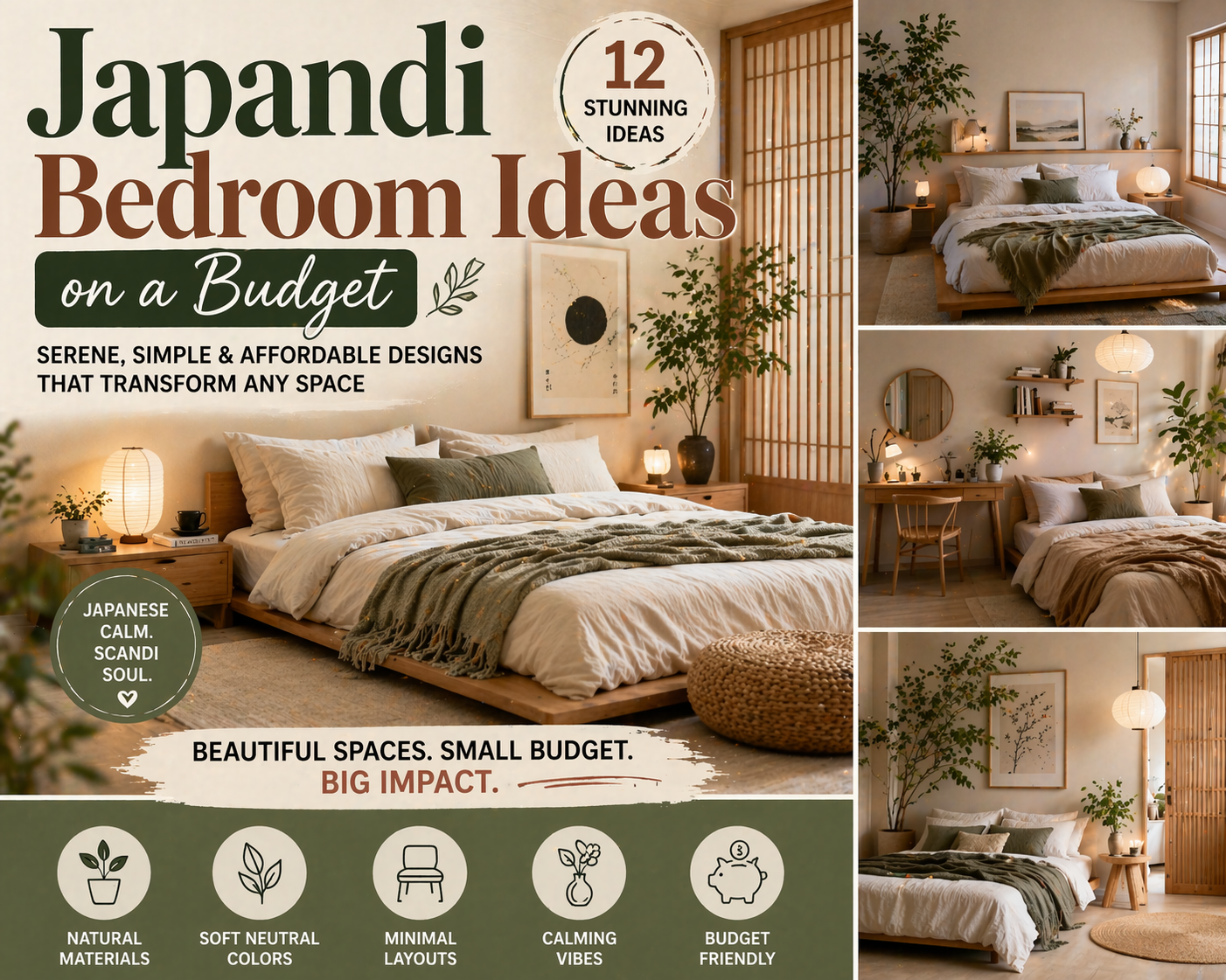
Japandi bedroom ideas on a budget occupy what is perhaps the most exciting — and most misunderstood — space in contemporary interior design: the intersection of two of the world’s most profound aesthetic philosophies, achieved without financial excess. Japandi—the considered fusion of Japanese wabi-sabi and Scandinavian hygge—is not merely a design trend. It is an architectural worldview built on the belief that the most beautiful spaces are those that are stripped of everything unnecessary, leaving behind only what is genuinely meaningful, functional, and quietly exquisite.
In a world of algorithmically driven maximalism and disposable interior trends, Japandi stands apart as an antidote—a visual exhale. And the remarkable secret that this guide will reveal is that of all the major global design philosophies, Japandi is perhaps the most naturally, organically achievable on a limited budget. Because Japandi does not depend on expensive statement pieces or designer labels. It depends on restraint, natural material, tonal harmony, and the radical simplicity of editing your space down to only what matters.
Whether you are redesigning a studio apartment, a single rented room, a dormitory, or the primary bedroom of a family home, these 12 Japandi bedroom ideas on a budget will give you the precise visual language, practical strategies, and curated product direction to create a space of extraordinary serenity and timeless beauty — all without the financial pressure that so often accompanies great design ambitions.
At Apex Aesthetic, we believe that great design is always within reach. This guide is the proof.
What Is Japandi Design — And Why Is It Perfect for a Budget Bedroom?
Japandi is a portmanteau of Japanese and Scandinavian design, and while the term is relatively modern, the philosophical overlap between these two aesthetic traditions is ancient and profound. Both cultures share a reverence for natural materials, a preference for purposeful simplicity, a philosophy of craft over consumption, and a deep aesthetic respect for negative space—the deliberate emptiness that gives meaning to what is present.
The Five Core Principles of Japandi Interior Design
| Principle | Japanese Root | Scandinavian Root |
| Wabi-sabi | Beauty in imperfection and impermanence | Acceptance of natural wear and organic form |
| Hygge | Warm, intimate atmosphere | Cozy, human-centred domestic comfort |
| Ma (negative space) | Intentional emptiness as a design element | Uncluttered, breathing room in layout |
| Craft and materiality | Reverence for handmade and natural materials | Quality over quantity, honest materials |
| Muted, earthy palette | Ink, charcoal, mushroom, stone | Warm white, ash, birch, sage |
According to Pinterest’s Global Design Trend Report, Japandi has experienced sustained search growth of over 380% in the past three years, making it consistently one of the fastest-growing design movements globally—and critically, one of the most budget-achievable, because its aesthetic depends on curation and quality of intention, not quantity of expenditure.
The 12 Best Japandi Bedroom Ideas on a Budget
1 — Build Your Palette From the Japandi Color Charter
The Japandi palette is the foundation upon which everything else rests, and getting it right costs nothing. The defining characteristic of Japandi color is warmth within neutrality—not the cold, clinical white of Scandinavian minimalism at its most austere, nor the dramatic earth tones of Japandi’s more maximalist interpretations, but a deeply considered set of muted, organic tones that shift the room’s visual temperature toward warmth and calm.
The Apex Japandi Color Charter:
- Primary (walls + large surfaces): Warm white (a white with yellow or beige undertone—never stark white), warm greige, natural plaster tones, ash grey, or soft taupe
- Secondary (furniture + textiles): Natural oak or walnut tones, raw linen, undyed cotton, charcoal, warm matte black
- Accent (maximum 10–15% of visual space): Sage green, muted terracotta, dusty rose, ink blue, or deep forest—introduced through cushions, a single ceramic piece, or a plant
Budget execution: Paint is your most powerful and most affordable Japandi tool. A single tin of quality interior paint in warm white or warm greige (£15–£40 / $20–$50) transforms the entire visual character of a room at a cost-per-impact ratio that no purchased piece of decor can match.
2 — Source a Low-Profile Bed Frame in Natural Wood
The bed is the gravitational center of any bedroom design, and in Japandi style, its defining characteristics are low profile, natural material, and simplicity of form. The traditional Japanese floor-level sleeping aesthetic—grounded, close to the earth, visually calming—is translated in Japandi through platform beds, futon-style frames, and low-slung wooden bases that create a sense of physical and visual stability.
Budget Japandi Bed Frame Sources:
- IKEA FJELLSE, MANDAL, or NEIDEN: All offer genuine pine wood construction at exceptional price points—paint or oil in walnut tone for an authentic Japandi upgrade
- Facebook Marketplace and Gumtree: Solid wood bed frames regularly appear at 10–20% of retail price; a simple sand and re-oil transforms any solid wood frame into a Japandi piece
- Local carpenters: In many markets (including India, Southeast Asia, and Eastern Europe), a custom solid mango or sheesham wood platform bed can be commissioned from a local carpenter for less than the cost of a mid-range flat-pack alternative
The Rule: Choose the warmth of wood tone (oak, walnut, or ash) over lightness (bare pine or maple) for the Japandi aesthetic—warmth grounds the space and creates the characteristic Japanese-Scandinavian fusion of calm and coziness.
3 — Dress the Bed in Natural Linen — The Japandi Signature Textile
If the Japandi aesthetic had a signature material, it would be linen. Undyed, minimally processed, natural linen bedding captures every dimension of the Japandi philosophy: it is honest (you see exactly what it is), it ages beautifully (wabi-sabi), it is breathable and functional (Scandinavian practicality), and it photographs with a naturally rumpled, effortlessly elegant quality that has made it the bedding of choice for every Japandi interior shoot in the past decade.
Budget Linen Bedding Strategy:
| Linen Quality Tier | Price Range | Where to Source |
| Budget (linen-cotton blend) | $20–$40 / £15–£30 | IKEA PUDERVIVA, H&M Home |
| Mid-range (80%+ linen) | $40–$80 / £30–£60 | Kultiver, Quince, Parachute |
| Investment (100% linen, stonewashed) | $80–$150 / £60–£120 | Piglet in Bed, The Linen Works |
Color selection: Choose undyed natural linen, warm white, oatmeal, or a single muted accent color (dusty sage, clay, or warm gray) for maximum Japandi authenticity. Avoid prints, patterns, and high-contrast color combinations.
The signature Japandi bed: Natural linen duvet cover in warm white + a single contrasting throw in charcoal, sage, or terracotta folded at the foot + one or two simple cushions in complementary linen or woven cotton. Nothing more.
4 — Introduce Natural Material Accents: Rattan, Bamboo, and Ceramic
Japandi design is inseparable from its commitment to natural, honest materials—and these materials are almost universally affordable, particularly when sourced secondhand or from budget retailers. The strategic placement of even three or four natural material pieces creates an immediately recognisable Japandi atmosphere.
The Apex Natural Material Introduction Guide:
- Rattan (furniture, lampshades, mirror frames): A rattan pendant light shade transforms a room’s ceiling instantly—available for $15–$40 from IKEA (KNIXHULT), Amazon, or secondhand markets. A rattan side table or stool adds organic texture at $20–$50
- Bamboo and cane: Cane-weave headboard panels (attach to existing headboard or wall with command strips), bamboo blinds, or a simple bamboo shelf—all under $30 and enormously impactful on the Japandi atmosphere
- Ceramic: A single hand-thrown or matte-glazed ceramic vase (in sage, warm white, or terracotta) on a bedside table is the quintessential Japandi decorative detail. Charity shops and thrift stores are extraordinary sources for beautiful ceramics at $2–$15
- Stone and slate: A small slate tray, a smooth river pebble used as a bookend, or a rough-edged stone coaster—these micro-details contribute an important geological heaviness that grounds the room visually
5 — Layer Warm, Neutral Textiles for the Hygge Dimension
The Scandinavian half of the Japandi equation introduces hygge — a Danish concept of warm, intimate domestic cosiness — through the strategic layering of soft textiles that make the room feel both visually beautiful and physically inviting. This is the element that prevents Japandi from reading as cold or stark.
The Apex Japandi Textile Layering System:
- Base layer: Your natural linen bedding (Step 3)
- Warmth layer: A woven cotton or chunky-knit throw in a contrasting neutral is draped casually across the foot of the bed
- Comfort layer: Two simple cushions (different sizes, complementary tones — never matching perfectly)
- Ground layer: A jute, sisal, or natural wool rug beneath the bed—the single most effective atmospheric change available for under $60
The goal is warmth and visual comfort, not abundance. Three to four thoughtfully chosen textiles will always outperform ten layered without intention.
6 — Choose Warm, Layered Lighting Over Harsh Overhead Fixtures
Japandi lighting is warm, intimate, and never harsh. The overhead ceiling fixture—particularly fluorescent and cool-toned LEDs—is antithetical to the Japandi atmosphere and should be supplemented or replaced with layered, warm-toned light sources that create pools of warmth rather than uniform illumination.
The Apex Japandi Lighting Layer:
- Replace bulbs: Switch all existing bulbs to warm white LED (2700K–2900K)—the single highest-impact and lowest-cost lighting change available, often under $10 for a complete set
- Add a floor or table lamp: A rattan- or ceramic-based lamp with a natural linen shade creates both Japandi material authenticity and atmospheric warmth—available from $20 to $60 at IKEA, Target, or thrift stores
- Paper pendant light: A paper or bamboo pendant shade (IKEA SINNERLIG, $20) transforms a ceiling bulb into a beautiful, diffused light source with distinctly Japanese aesthetic character
- Candles: Unscented or subtly scented soy candles in matte ceramic vessels are perhaps the most quintessentially Japandi light source available—warm, flickering, natural, and deeply atmospheric
7 — Apply the Ma Principle: Master the Art of Empty Space
Ma (間) is one of the most important and most practically challenging concepts in Japanese aesthetic philosophy. It refers to the intentional use of empty space—the deliberate negative space that gives objects and rooms their meaning. In Japandi bedroom design, “Ma” means resisting the Western impulse to fill every surface, every corner, and every wall with objects.
Practical Ma Application:
- Leave at least one full wall completely bare—or with a single, significant piece of art positioned with generous surrounding space
- Allow furniture pieces to “breathe”—no piece should touch another; maintain a minimum 40–60cm clearance between major furniture pieces
- Keep surfaces at a maximum 30% “occupancy”—a bedside table with one lamp, one book, and one ceramic has Ma; the same table with seven objects does not
- Embrace floor space—particularly visible floor space around and beneath the bed (another reason low-platform beds are essential: Japandi elements reveal, rather than conceal, the floor)
The empty space in a Japandi room is not an absence. It is the presence of a different kind—the visual silence that allows every thoughtful element to speak.
8 — Create a Japandi Focal Point With a Simple, Meaningful Art Piece
Art in a Japandi bedroom is not decoration — it is the room’s single most meaningful visual statement, and it must be chosen with corresponding care. The Japandi art philosophy is singular and deliberate: one significant piece, given abundant space, commands infinitely more presence than a gallery wall of competing images.
Japandi Bedroom Art That Works:
- Sumi-e (Japanese ink wash) prints: Minimalist, atmospheric, and endlessly beautiful—available as affordable reproduction prints on Etsy ($8–$25 printed and framed yourself)
- Abstract organic form painting: A single neutral-toned abstract canvas in sand, charcoal, or sage—particularly effective when painted yourself using a simple palette knife technique (a genuinely budget option with extraordinary results)
- Calligraphy or kanji art: A single Japanese or Nordic character with significant personal meaning, framed simply in natural wood
- A botanical specimen print: A pressed botanical, fern frond, or branch printed in muted tones—deeply Japandi in its reverence for the natural world
Framing: Always choose natural wood (light oak or ash) or simple matte black frames. Never use ornate, gilded, or highly decorative frames—they break the Japandi visual rhythm entirely.
9 — Add One or Two Statement Plants
Plants are essential to the Japandi aesthetic — but unlike the plant maximalism of tropical or bohemian interiors, Japandi plant selection is highly specific. The defining characteristic is architectural form over lushness: plants chosen for their sculptural quality, their visual weight, and the way they introduce organic form into the room’s composed minimalism.
The Apex Japandi Plant Selection:
| Plant | Japandi Character | Approximate Cost |
| Snake Plant (Sansevieria) | Architectural, vertical, minimal maintenance | $8–$20 |
| Bonsai (starter size) | Quintessentially Japanese — patience and form | $15–$40 |
| Monstera Deliciosa | Organic, dramatic form, deeply photogenic | $12–$30 |
| Bamboo (lucky bamboo) | Authentic Japanese symbolic plant, versatile | $5–$15 |
| ZZ Plant | Dark, waxy leaves with sculptural form | $10–$25 |
Pot selection matters as much as plant selection in Japandi design. Choose matte ceramic, unglazed terracotta, or simple concrete pots in the room’s neutral palette. Never plastic — it breaks the material authenticity of the space.
10 — Solve Storage With Japanese-Inspired Hidden Solutions
Japandi’s visual serenity depends on the complete elimination of visual clutter, which means that everything that serves a function but lacks aesthetic value must be invisible. Japanese design culture has developed extraordinary approaches to storage discipline that directly serve this goal.
The Apex Japandi Storage Philosophy:
- Under-bed storage (with aesthetic boxes): Flat storage boxes in neutral linen fabric or natural woven material — functional storage that remains beautiful if glimpsed
- Furniture with integrated storage: An ottoman at the bed’s foot in natural linen, a platform bed with hydraulic storage (investment, but transformative)
- Wardrobe doors, not open rails: Open clothing rails are antithetical to Japandi—clothing is a visual pollutant in this aesthetic. Flush-door wardrobes in matte white or natural wood create unbroken visual surfaces
- The decant principle: Store daily-use items (books, phone, water glass) on the nightstand; store everything else inside closed storage. The surface discipline of Japandi is absolute
For more transformative approaches to elegant, clutter-free living that amplify both your home’s beauty and your daily performance, our guide on how to build self-discipline daily explores the deep, powerful relationship between your physical environment and your inner discipline—an Apex cross-category connection that drives both your space and your mindset.
11 — Use Window Treatments That Honour Natural Light
Natural light is one of the Japandi bedroom’s most precious design elements, and window treatments should celebrate and filter it rather than block it entirely. The characteristic Japanese shoji screen (a translucent paper panel that diffuses light into a beautiful, even glow) is the inspiration behind the Japandi approach to window coverings.
Budget Japandi Window Treatments:
- Sheer linen or muslin panels (white or ivory): Diffuse natural light beautifully while maintaining privacy—available from IKEA for $8–$15 per pair or from any fabric store as simple hemmed panels
- Bamboo or wooden shoji blinds: Natural, warm, and authentically Japanese in character—$15–$40 for a standard window size, available from most home improvement retailers
- Roman blinds in neutral linen: A clean, unfussy alternative to curtains—in warm white or natural linen tones, they complement the Japandi palette seamlessly
The Rule: Never use heavy, ornate, or patterned curtains in a Japandi bedroom. The window treatment should be almost invisible — a gentle modifier of light, not a statement in itself.
12 — Introduce Scent as a Japandi Design Element
The most immersive Japandi bedrooms engage all five senses, not just sight. Japanese aesthetic culture has an ancient and sophisticated relationship with scent—from kōdō (the Japanese art of incense appreciation) to the deeply considered fragrance rituals of traditional Japanese bathhouses—and introducing scent as a deliberate design element elevates your Japandi bedroom from a visual experience to a fully sensory sanctuary.
The Apex Japandi Bedroom Scent Palette:
- Hinoki wood (Japanese cypress): The defining scent of traditional Japanese interiors—clean, woody, and faintly sweet. Available in incense sticks, diffuser oils, or candles
- White tea and rice: Delicate, clean, barely-there—the Scandinavian sensibility in scent form
- Yuzu citrus: Bright, clean, and unmistakably Japanese — an excellent morning scent for the bedroom space
- Sandalwood and vetiver: Deep, grounding, sophisticated — ideal for evening atmosphere and sleep preparation
Budget scent options: MUJI incense sticks (authentic Japanese hinoki variety, $8–$15), bamboo reed diffusers from any home store ($10–$25), or a simple beeswax or soy candle in a matte ceramic vessel ($8–$20).
The Complete Japandi Bedroom Budget Planner
| Design Element | Budget Tier | Investment Tier |
| Wall paint (warm white/greige) | $20–$40 | $40–$80 (premium brand) |
| Low-profile bed frame | $80–$200 | $300–$600 |
| Natural linen bedding set | $30–$60 | $80–$150 |
| Natural material lamp | $20–$40 | $60–$120 |
| Rattan pendant shade | $15–$30 | $50–$100 |
| Jute or wool rug | $30–$60 | $80–$200 |
| Plants + ceramic pots (×2) | $20–$40 | $60–$120 |
| Art print + natural wood frame | $15–$35 | $60–$200 |
| Bamboo blinds | $20–$40 | $60–$120 |
| Natural ceramics (×3) | $10–$30 | $40–$100 |
| Scent element (incense/candle) | $8–$20 | $25–$60 |
| Total | $268–$595 | $855–$1,850 |
A complete, genuinely beautiful Japandi bedroom transformation is achievable for under $600 — and with strategic thrifting and DIY elements, many people achieve the full aesthetic for under $300.
Frequently Asked Questions About Japandi Bedroom Ideas on a Budget
What is the difference between Japandi and minimalism?
Minimalism is a broad design philosophy defined by the reduction of elements. Japandi is a specific aesthetic fusion defined by how those remaining elements look and feel — warm, natural, craft-informed, and culturally resonant with both Japanese and Scandinavian traditions. Japandi is minimalism with soul, warmth, and materiality.
Can I achieve the Japandi style in a rented room without painting the walls?
Absolutely. If wall color cannot be changed, focus on textiles (bedding, rugs, and curtains in neutral, warm tones); lighting (replace existing bulbs with 2700K warm LEDs and add a table lamp); natural material accents (plants, ceramics, and rattan); and rigorous decluttering. The palette comes from the objects, not just the walls—and in a well-curated Japandi space, the objects carry the aesthetic with remarkable power.
What is the most important purchase for a Japandi bedroom on a budget?
Warm-toned LED light bulbs and natural linen bedding are tied for the highest Japandi impact per dollar spent. Lighting transforms the atmosphere of the entire room instantly, and the bed is the primary visual statement in any bedroom. These two investments, combined with rigorous decluttering, create an immediately recognisable Japandi aesthetic regardless of what else is in the room.
Is Japandi suitable for small bedrooms?
It is, in fact, ideal for small bedrooms. The Ma principle (negative space), low-profile furniture, neutral palette, and severe anti-clutter discipline of Japandi design all work synergistically to make small rooms feel dramatically larger, calmer, and more intentionally designed. Japandi in a small room is not a compromise — it is the most powerful design solution available.
CONCLUSION
Japandi bedroom ideas on a budget are ultimately an invitation to one of the most powerful realizations available to any person who cares about how they live: that beauty, when it is rooted in authenticity, restraint, and intentional material, costs almost nothing. The most magnificent Japandi rooms in the world are not defined by designer price tags or architectural budgets. They are defined by the depth of their intention — the degree to which every element, every color, every texture, and every empty space has been considered and chosen with genuine thought.
This is the Apex philosophy in its most portable, most accessible form: the conviction that how you design your space is a direct expression of how you design your life. A Japandi bedroom is not just beautiful. It is a daily practice of clarity, calm, and the radical power of enough.
Begin with one wall. Begin with one plant. Begin with the extraordinary act of removing three unnecessary objects from your bedroom tonight. And watch what the space reveals when you give it room to breathe.
Ready to bring Japandi principles into every dimension of your home and your life? Explore the full Apex Design & Curation collection and discover how the world’s most beautiful, most intentional spaces are built—one deliberate, minimal choice at a time.
OUTBOUND LINKS
Pinterest Global Design Trend Report — https://business.pinterest.com/en/blog/pinterest-predicts/
INTERNAL LINKS
- How to Build Self-Discipline Daily—https://apexaesthetic.blog/how-to-build-self-discipline-daily/ (cross-link: new post)
- Emerging Digital Art & NFT Investment Guide — https://apexaesthetic.blog/emerging-digital-art-nft-investment-guide/ (existing, first-time assigned)
- Skin Barrier Repair Routine Steps — https://apexaesthetic.blog/skin-barrier-repair-routine-steps/ (cross-link: new post)
1 thought on “12 Japandi Bedroom Ideas on a Budget That Feel Luxurious”