
Table of Contents
Introduction
Red light therapy for skin has moved out of dermatology offices and into bathroom counters across the U.S. LED masks, handheld wands, and full-body panels now promise smoother skin, fewer breakouts, and stronger collagen, all without a single needle.
Does it actually work? That’s the real question, and a fair one.
Research suggests red light therapy can support healthier-looking skin, but the results depend on consistency, device quality, and realistic expectations. A 21-expert international panel published 38 consensus statements on photobiomodulation safety and efficacy in the Journal of the American Academy of Dermatology in 2025, which is the strongest signal yet that this isn’t just a wellness trend. This guide breaks down what the science says, who tends to benefit, what red light therapy can’t do, and how to build a routine that won’t waste your money.
What is red light therapy?
Red light therapy uses red or near-infrared light aimed directly at the skin to trigger changes inside skin cells. It doesn’t cut, burn, or remove any tissue.
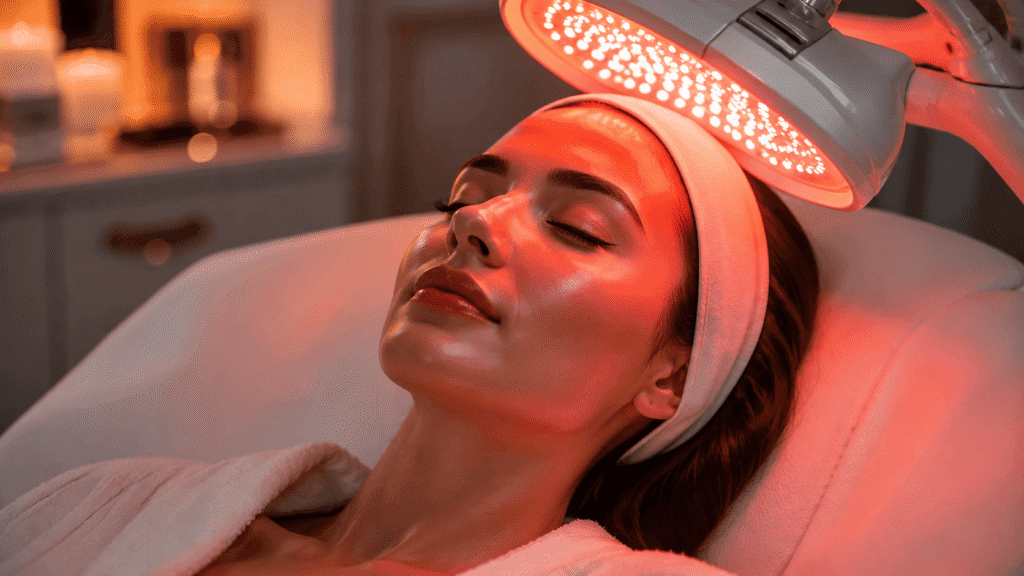
Doctors call it photobiomodulation, and you might also hear it called low-level laser therapy. It involves devices that emit red or near-infrared light aimed at the skin, and it’s believed to reduce inflammation and boost collagen production.
How red wavelengths interact with skin cells
Red light in the 620–700 nm range and near-infrared light from 700–1,440 nm penetrate skin at different depths. Photobiomodulation is most often delivered through low-level lasers or LEDs, and research shows it can help with conditions ranging from acne and alopecia to wounds and scars.
The light doesn’t heat skin the way a laser resurfacing treatment does. It works at a cellular level instead.
Why dermatologists use LED treatments
Dermatologists like LED-based treatments because the risk profile is low compared to more aggressive procedures. The American Academy of Dermatology has noted that many at-home LED devices and low-level lasers are considered safe for home use.
That doesn’t mean every device on Amazon meets the same bar. More on that below.
How does red light therapy work?
Red light is thought to act on mitochondria, the energy-producing structures inside skin cells. Harvard Health describes red light therapy as something believed to stimulate mitochondria to reduce inflammation and boost collagen production, a protein that keeps skin firm and supple.
From there, three things tend to happen with regular use:
- Cells produce more ATP, the energy molecule that powers repair
- Collagen and elastin synthesis increase over weeks of treatment
- Inflammatory signalling drops, which calms reactive skin
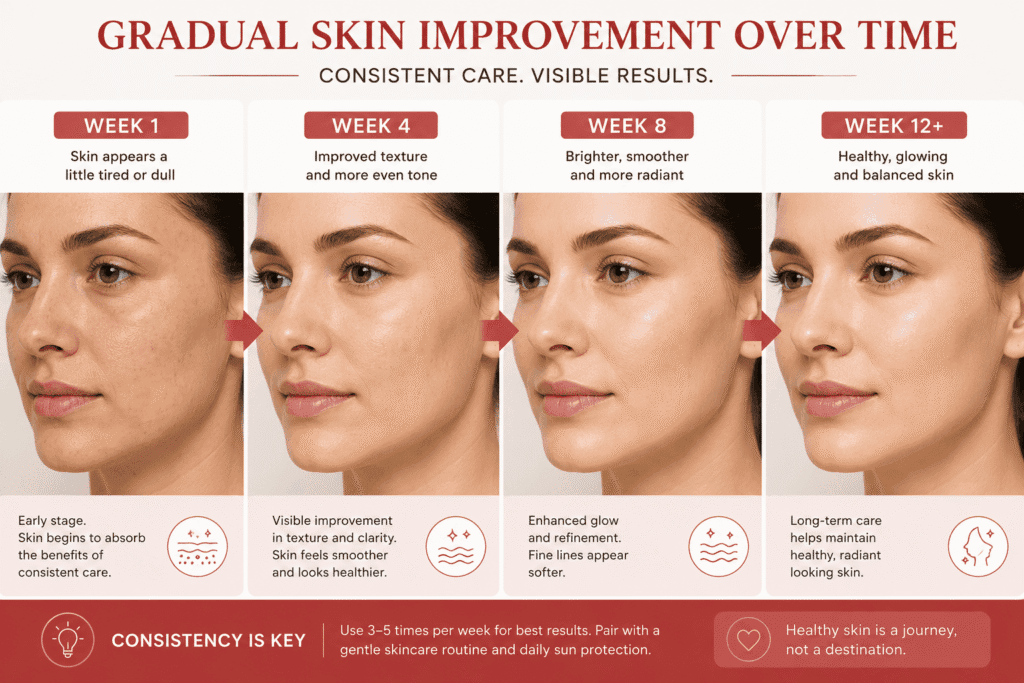
Research suggests these changes build slowly. Some studies indicate visible improvement takes 8 to 12 weeks of consistent use, not 8 to 12 days. Avoid expecting overnight results — this is a gradual process, not a quick fix.
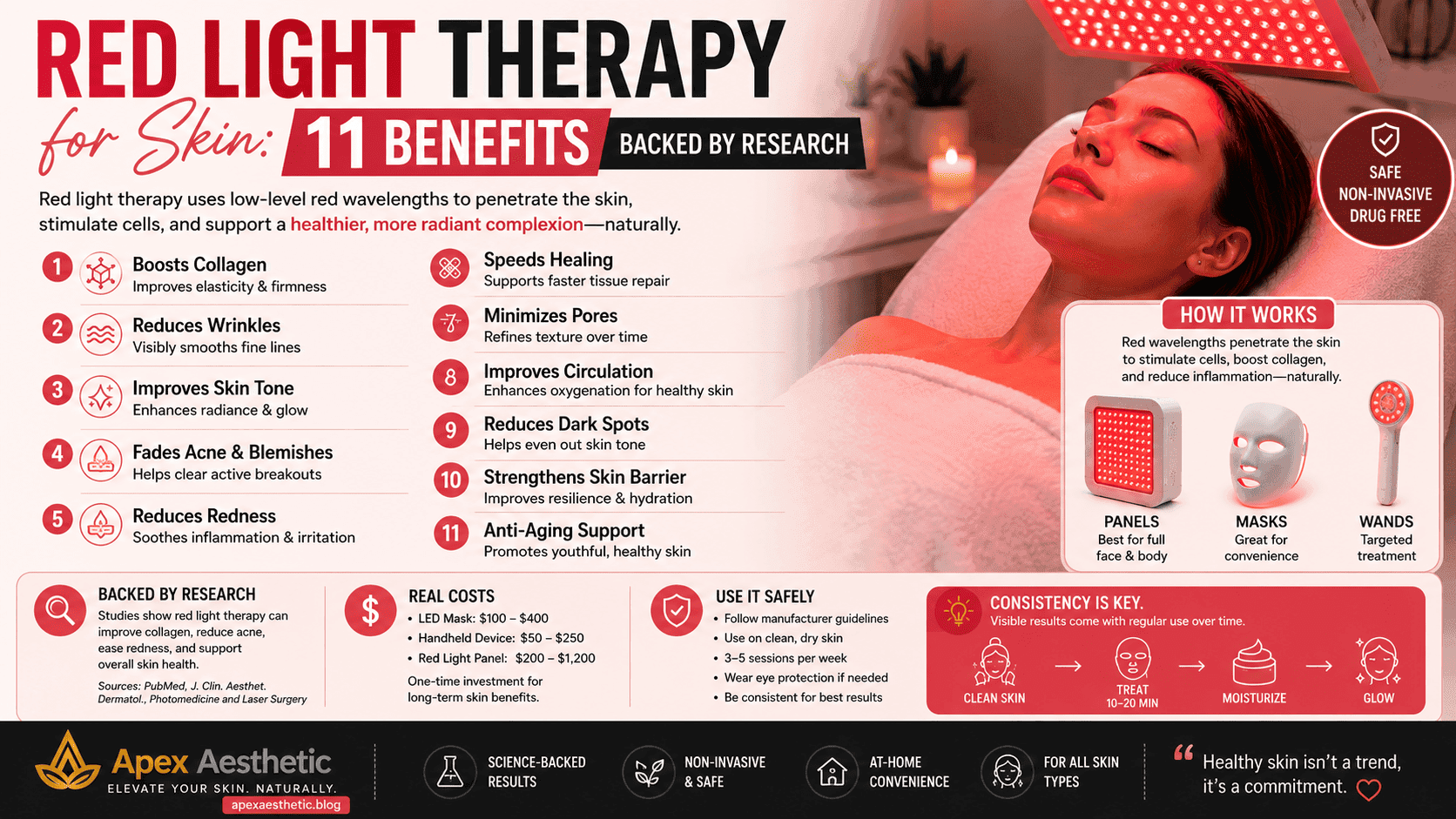
11 potential benefits of red light therapy for skin
1. May reduce fine lines and wrinkles
Anti-aging skin treatments built around red light target collagen loss, the main driver of fine lines. A 2007 split-face clinical study found measurable improvement in skin texture and firmness after a course of LED phototherapy treatments.
Collagen stimulation therapy works gradually. Most people notice softer lines around week 6, not week 1.
One lesson that repeatedly emerges from modern skincare routines is that technology works best when it supports existing habits rather than replacing them.
Red light therapy may complement sunscreen, moisturizers, and retinoids, but it rarely acts as a standalone solution. Long-term improvements usually come from consistency and a well-rounded skincare routine.
2. Supports natural collagen production
Collagen production for skin is the headline benefit researchers keep coming back to. A JAAD-published study found that clinical treatment with red or infrared LED light has been shown to augment tissue repair and promote skin regeneration.
This is a skin rejuvenation treatment, not a collagen injection. The body still has to do the work — the light just nudges it along.
3. May help improve acne and inflammation
Acne treatment light therapy gets attention because it skips antibiotics and harsh topicals. A March 2025 meta-analysis in JAMA Dermatology reviewed six studies covering more than 200 patients and found that at-home LED devices reduced acne lesions by roughly 45% over 4 to 8 weeks.
Combining red and blue light tends to outperform red light alone for active breakouts, since blue light targets acne-causing bacteria directly.
The most successful acne treatment plans typically combine multiple evidence-based approaches instead of relying on a single device or ingredient.
Red light therapy may help reduce inflammation, but dermatologists often recommend pairing technology with appropriate cleansing routines, topical treatments, and professional guidance when necessary.
4. Promotes faster skin recovery
Facial rejuvenation methods that include red light are now common add-ons after peels or microneedling. Dermatologists note that red light can help heal wounds and soften scars, which is why many clinics schedule a session right after a more aggressive treatment.
5. Reduces redness and irritation
Sensitive skin treatments built around red light work through inflammation reduction rather than chemical exfoliation. Calmer, less reactive skin tends to follow reduced inflammatory cytokine signaling, the same pathway that’s behind much of red light’s anti-redness reputation.
6. Improves overall skin texture
A smoother skin appearance is one of the more consistently reported outcomes across clinical trials. Skin resurfacing alternatives like red light therapy won’t match a deep chemical peel, but they come with far less downtime and risk.
7. May support skin elasticity
Skin tightening treatment claims need a caveat: red light supports elasticity through collagen and elastin growth, not through any kind of physical tightening. Red light also stimulates hyaluronic acid production, with JAAD-published research showing it can support tissue repair and regeneration.
8. Complements professional treatments
Dermatologists recommend that skincare routines increasingly pair red light with retinoids or vitamin C rather than replacing them. Professional skin treatment plans use red light as one layer in a stack, not a standalone fix.
9. Offers a non-invasive option
For people who want results without surgery, needles, or numbing cream, red light therapy is genuinely non-invasive. Non-invasive skincare treatments like this carry far less risk than cosmetic procedures, though they also work more slowly and less dramatically.
10. Provides convenient at-home treatment
Home red light therapy device options have expanded fast. An LED face mask now costs $150 to $500, and beauty technology products like handheld wands run $50 to $200.
Look for FDA-cleared red light therapy devices specifically. FDA clearance for a Class II medical device means the manufacturer demonstrated safety and effectiveness data to the agency, which random imported masks often skip.
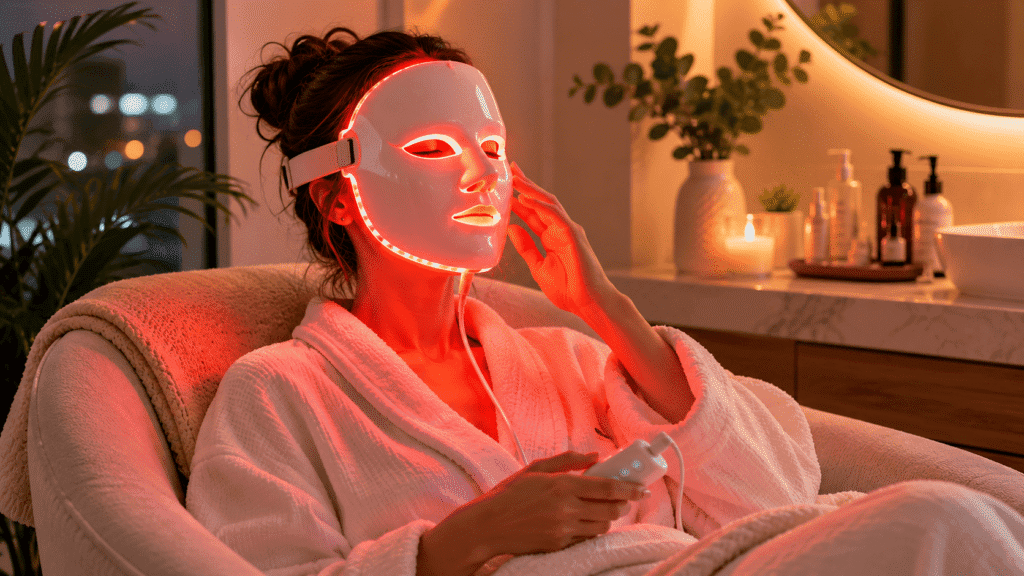
One thing that stands out across home skincare routines is that convenience often determines consistency. Treatments that fit naturally into existing habits tend to deliver better results than complicated routines that feel difficult to maintain over time.
11. Encourages a consistent self-care habit
This sounds like a soft benefit, but it isn’t. Skincare routines fail far more often from inconsistency than from picking the “wrong” product. A 10-minute red light session most evenings gives people a reason to also cleanse, moisturize, and apply sunscreen the next morning.
Does red light therapy actually work?
Research suggests red light therapy works for some concerns better than others. A 2023 systematic review in the Aesthetic Surgery Journal found no serious adverse events and no link to cancer across the studies reviewed. That’s a meaningful safety signal, even though effectiveness still varies by condition and device.
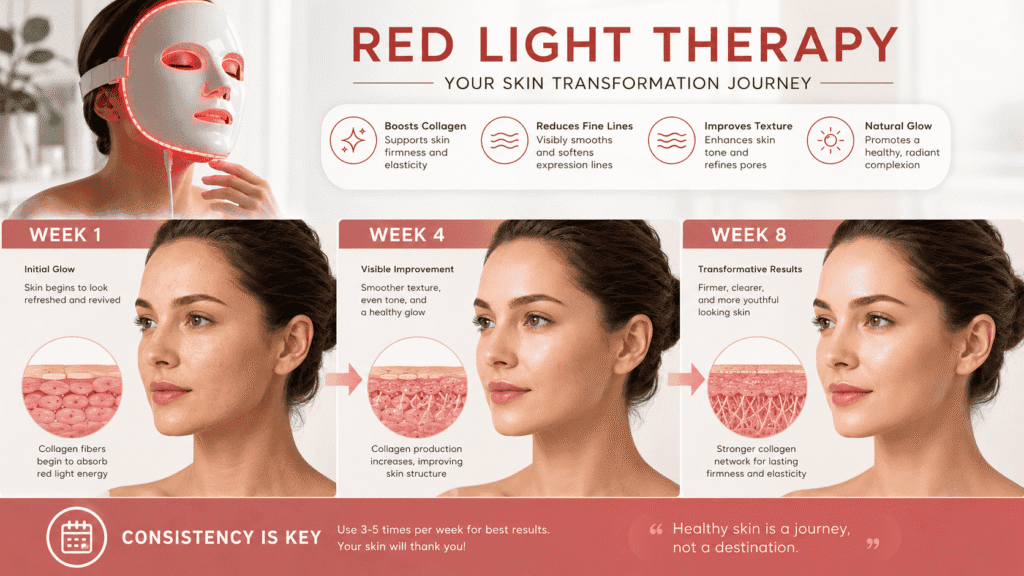
Across dozens of dermatology sources reviewed for this guide, one pattern repeats constantly—people expect dramatic before-and-after photos after a week or two. Harvard Health quotes a dermatologist explaining that devices need to be used multiple times a week for four to six months to work, calling it slow and steady rather than a quick fix. The takeaway: judge red light therapy on a 3-month timeline, not a 3-week one, or you’ll quit right before it starts working.
One recurring pattern across dermatologist guidance is that consistency matters far more than intensity. People often expect dramatic changes after a few sessions, but most visible improvements usually emerge after several weeks of regular use. The most effective skincare technologies support healthy habits rather than replacing them entirely.
Which Red Light Therapy Option Delivers the Best Value?
| Treatment Type | Cost | Convenience | Best For | Long-Term Value |
| Dermatology Clinic | $$$ | Low | Severe concerns | High |
| Medical Spa | $$ | Medium | Maintenance | Medium |
| LED Face Mask | $$ | High | Regular home use | Excellent |
| Handheld Device | $ | High | Spot treatment | Good |
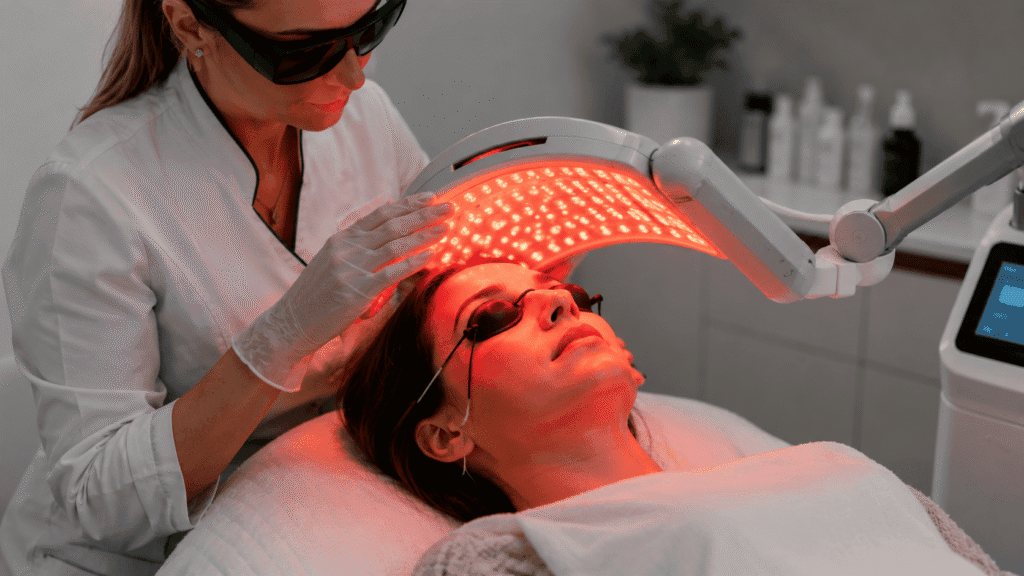
Professional treatments vs at-home devices
| Option | Average cost | Convenience | Best for |
| Dermatology clinic | $75–$300/session | Low | Advanced concerns |
| Medical spa | $40–$150/session | Medium | Maintenance |
| LED face mask | $150–$500 total | High | Home users |
| Handheld device | $50–$200 total | High | Targeted spots |
Clinic devices run at higher power, which is why a dermatologist can often show faster results than a home mask. At-home skincare devices make up the gap with frequency — you can use one nightly instead of once a month.
Many consumers purchase the most expensive device available, assuming higher prices guarantee better outcomes.
In reality, reliable routines often matter more than premium features. A well-designed LED device used consistently may deliver greater long-term value than an expensive product that sits unused after a few weeks.
What does the market actually look like right now?
The numbers explain why so many brands are racing into this space. The global light therapy market reached roughly $1.16 billion in 2025, and L’Oréal unveiled its own LED mask at CES 2026.
That kind of growth pulls in a lot of low-quality products alongside the well-tested ones. More devices on shelves doesn’t mean more devices are backed by real data—it just means more marketing copy to read past.
A useful filter: look for a listed wavelength range, a stated power output in mW/cm², and FDA clearance documentation. Brands that publish this information tend to have done the work. Brands that only show before-and-after photos usually haven’t.
Who should avoid red light therapy?
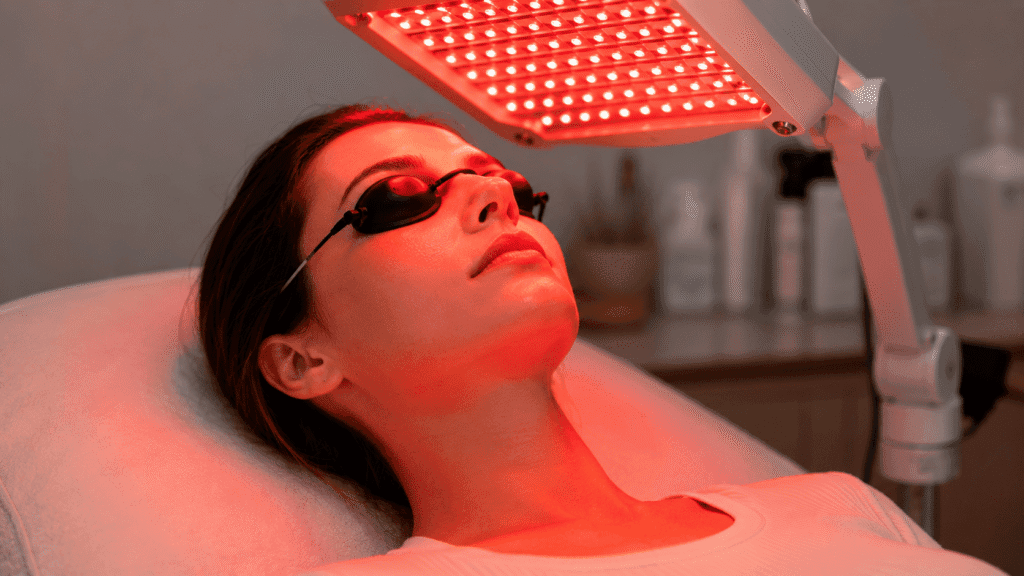
Most healthy adults can use red light therapy without issue. A few groups should check with a doctor first.
- People on photosensitizing medications, including certain antibiotics and acne drugs
- Anyone with a history of skin cancer or active suspicious lesions
- People with epilepsy, since flickering light can be a trigger for some
- Pregnant women, simply because large-scale safety data is limited
The American Academy of Dermatology notes that red light therapy is likely safe for short-term use, and no research currently suggests red light causes cancer. That’s reassuring, but “likely safe for short-term use” is still a research-based statement, not a guarantee. Always check with a dermatologist before starting if you fall into one of the groups above, and protect your eyes with the goggles that most devices include.
Common mistakes that limit results
Expecting instant improvements
The single biggest reason people give up. Results build over weeks, not days.
Using devices inconsistently
Three sessions one week and zero the next won’t replicate steady research protocols. Most clinical trials used sessions 3 to 5 times weekly.
Ignoring manufacturer instructions
Distance from the skin and session length both affect dose. Sitting too close to a panel can raise the dose past what was actually tested.
Skipping sunscreen
Red light doesn’t replace sun protection. Skipping SPF the morning after a treatment cancels out a lot of the benefit.
Buying unverified products
A cheap mask with no FDA clearance and no published wavelength specs is a gamble. Real devices list exact wavelengths (typically 630–660 nm for red, 810–850 nm for near-infrared) on the box.
The devices that get returned most often aren’t the cheap ones—they’re the expensive ones bought right before a big event, then abandoned three weeks in when results didn’t show up fast enough. The cheaper, consistently used mask usually wins.
Many skincare technologies fail to meet expectations, not because the science is flawed, but because routines never become sustainable. People often abandon treatments after a few sessions while expecting immediate improvements. In most cases, consistency matters far more than purchasing the newest or most expensive device.
How to build a red light therapy routine
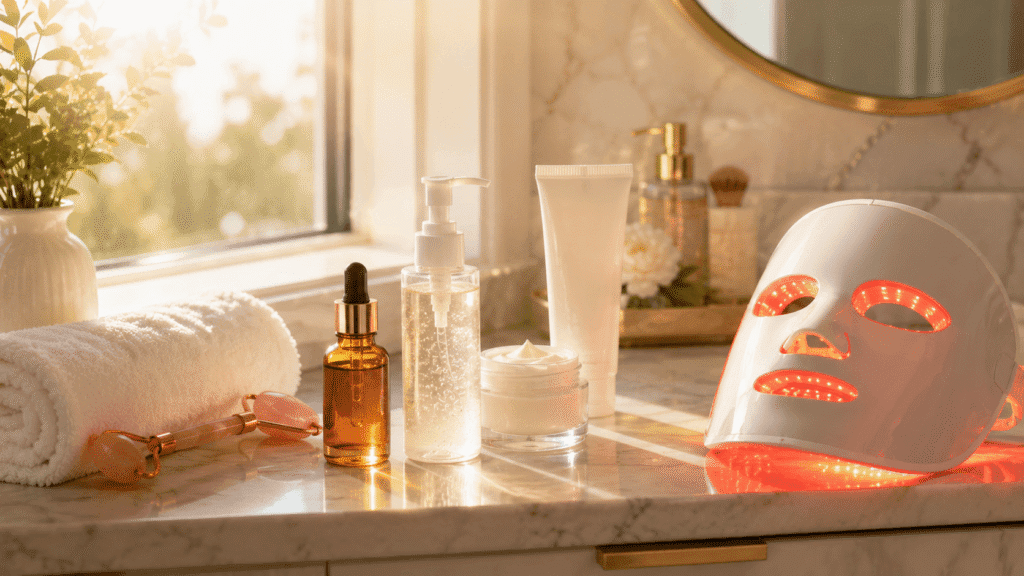
Morning: Cleanse, apply vitamin C serum, finish with sunscreen. Skip red light therapy in the morning if you’re short on time—it pairs better with an evening routine.
Evening: Cleanse, use the device for 10 to 20 minutes per the manufacturer’s guide, then apply a gentle moisturizer.
Avoid pairing sessions with aggressive exfoliants like high-strength retinoids or AHAs on the same night. Give skin a buffer night in between.
A simple weekly cadence that lines up with most clinical protocols looks like this:
- Monday, Wednesday, Friday: full session, 10–20 minutes
- Tuesday, Thursday: rest, moisturizer and SPF only
- Weekend: one optional session, plus a longer skincare routine with cleanser, serum, and night cream
This kind of schedule mirrors the 3-to-5-times-weekly frequency used in most of the studies cited earlier. Skipping a week here and there won’t undo progress, but skipping most weeks will.
The most effective skincare routines are usually the simplest ones people can maintain for months rather than days. A straightforward combination of cleansing, sun protection, hydration, and occasional technology-based treatments often outperforms complicated routines filled with constantly changing products.
Watch a dermatologist break down red light therapy on YouTube for a visual walkthrough of proper device placement and timing.
Frequently Asked Questions: Red Light Therapy for Skin
How long does red light therapy take to work?
Most research points to 8 to 12 weeks of consistent use, several times weekly, before visible changes in texture or fine lines show up.
Can I use red light therapy every day?
Many devices are labelled safe for daily use at 10 to 20 minutes per session. Check your specific device’s instructions, since power output varies.
Does red light therapy tighten skin?
Not directly. It supports collagen and elastin production over time, which can improve firmness, but it doesn’t physically tighten tissue the way a laser or radiofrequency treatment might.
Is red light therapy safe?
Research suggests short-term use is generally safe for most healthy adults, with mild redness or warmth as the most common side effect. People on photosensitizing medications or with a history of skin cancer should consult a doctor first.
Can red light therapy help acne?
Some studies indicate it may reduce inflammation tied to acne, and a 2025 meta-analysis found that at-home LED devices reduced acne lesions by about 45% over 4 to 8 weeks. Combining red and blue light tends to work better than red alone.
Are at-home devices effective?
At-home devices use less power than clinic-grade equipment, so results tend to come slower. Consistent use several times a week over months still produces measurable change for many users.
Conclusion
Red light therapy isn’t a miracle treatment, and no credible source claims it is.
Research suggests it may support healthier, more resilient skin when paired with sunscreen, a real skincare routine, and patience measured in months rather than days. The best results come from picking one well-documented device, sticking with it, and pairing sessions with proven basics like vitamin C and daily SPF.
For more science-backed skincare guidance, continue with:
- Body Care Routine for Glowing Skin
- Hair Growth Routine for Thicker Hair
- Night Skin Care Routine for Glowing Skin
- Peptides Benefits That Help Skin Look Younger Naturally
- Benefits of Collagen for Healthier Skin, Hair & Joints
Sources:
- American Academy of Dermatology — Is red light therapy right for your skin?
- Harvard Health Publishing — Red light therapy for skin care
- Cleveland Clinic — Red Light Therapy: Benefits, Side Effects & Uses
- Journal of the American Academy of Dermatology—Low-level red and infrared light increases expression of collagen, elastin, and hyaluronic acid in skin
- Journal of the American Academy of Dermatology—Photobiomodulation CME, Part II