Table of Contents
Introduction
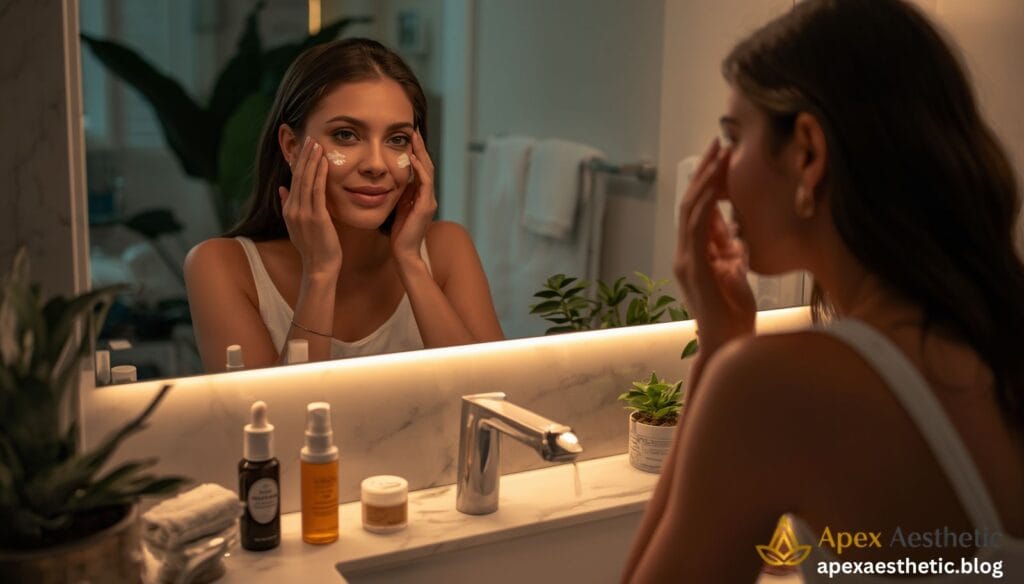
The first time I slathered Vaseline all over my face before bed, I felt completely ridiculous. My partner walked in, stared for three full seconds, and walked back out. Two weeks later, my dry patches were gone, and my skin looked calmer than it had in two years.
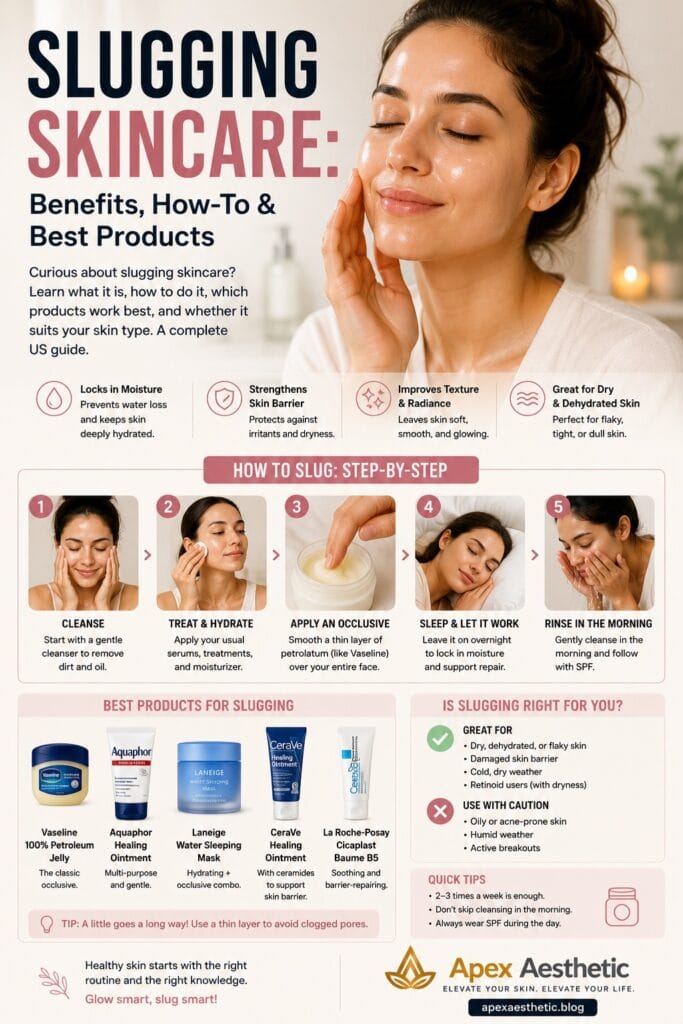
That is sludge-ing skincare. You apply a thin layer of an occlusive product like Vaseline, Aquaphor, or CeraVe Healing Ointment as the very last step in your nighttime routine. The goal is to lock in every drop of moisture your skin just absorbed so it does not evaporate overnight.
It went viral on TikTok and in K-beauty communities for a reason. But before you grab the nearest jar of petroleum jelly, a few things are worth knowing, especially if you have oily skin, use retinol, or deal with eczema. This guide covers what slugging skincare actually does, which skin types benefit most, what products to use, and how to do it safely.
What does slugging actually mean?
Slugging means applying an occlusive as the final step of your nighttime routine. The name comes from the shiny, slug-like appearance of the skin immediately after application.
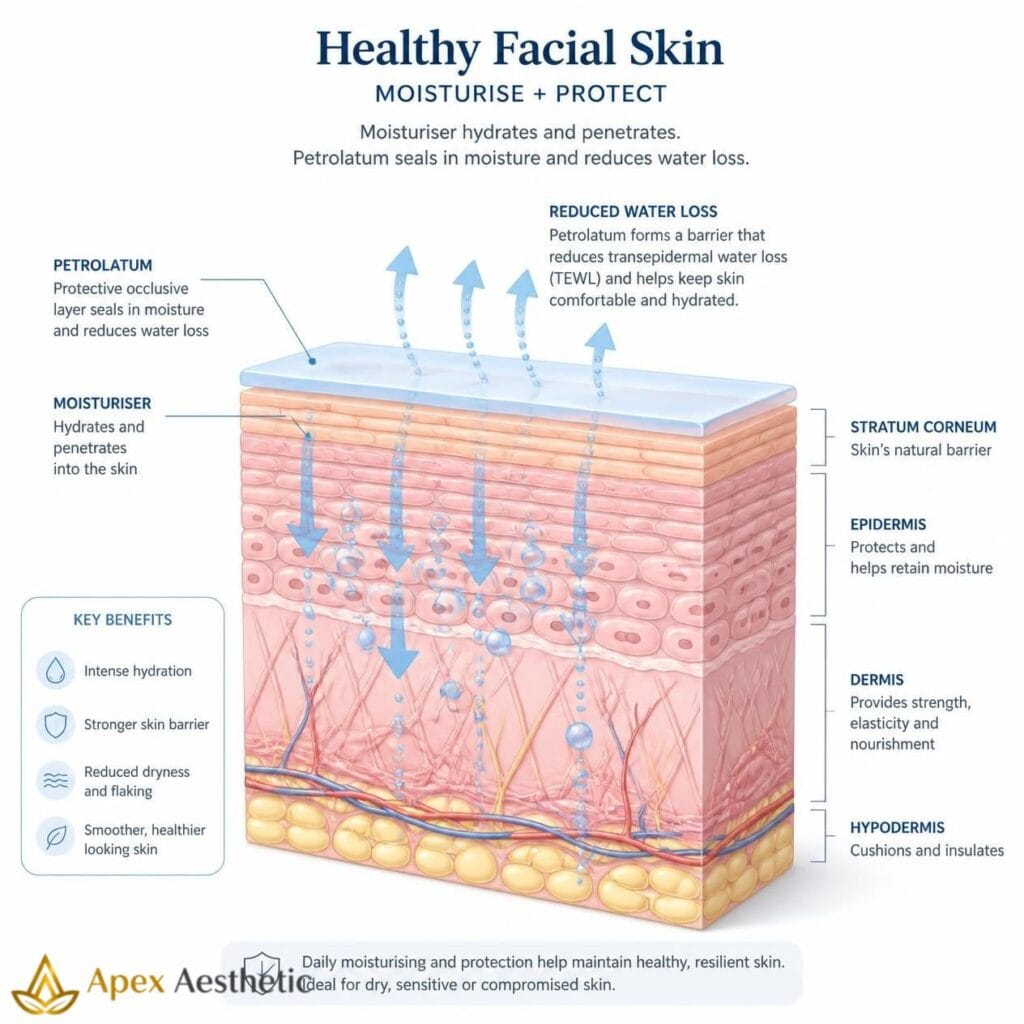
Occlusives work differently from regular moisturisers. A moisturiser hydrates by depositing water or drawing it toward the skin. An occlusive creates a physical barrier that stops water from leaving it. The clinical term for moisture escaping through your skin is transepidermal water loss, or TEWL. Occlusives reduce it significantly.
Here is how the three skincare categories differ:
- Humectants (hyaluronic acid and glycerin): attract water to the skin
- Emollients (moisturizers, shea butter): soften and condition
- Occlusives (Vaseline, Aquaphor, ceramide ointments): seal moisture in place
You still need a moisturiser before slugging. An occlusive alone does nothing without hydration underneath.
Where did the Korean slugging trend come from?
K-beauty routines have included occlusives as a final sealing step for decades. It is a core part of the glass skin method that Korean skincare communities refined long before Western audiences discovered it. Skin slugging went viral on TikTok in late 2021, and Reddit’s r/SkincareAddiction had been discussing it months earlier.
For the full K-beauty layering context, the glass skin routine for dry skin covers the complete sequence that slugging fits into.
I learned about slugging from a Reddit skincare thread in early 2022, months before beauty media picked up on it. The thread had more than 3,000 comments. People were calling a $4 jar of Vaseline the best skincare purchase they’ve ever made.
Early Reddit users reported 2-3 week timelines for improvement on dry patches, which was almost exactly what I was seeing.
TikTok viral skincare trends typically begin on Reddit 6-12 months earlier. If you want to be ahead of the curve, r/SkincareAddiction is a good one to follow.
How is slugging different from a regular moisturiser?
A moisturiser deposits water and hydrating ingredients into your skin. An occlusive keeps that moisture from leaving overnight. You need both in sequence to get the full benefit of the slugging technique.
Key point: slugging does not replace your moisturiser. It completes your nighttime routine by sealing what you have already applied.
What are the real benefits of slugging for your skin?
Slugging produces consistent, measurable results for most skin types. Here is what actually happens with overnight occlusive use:
You wake up with noticeably softer skin without applying anything extra in the morning. Moisture from your serum and moisturiser deposits stays in your skin rather than evaporating while you sleep. Over time, consistently reducing TEWL gives your skin barrier the conditions it needs to repair itself from damage caused by cold weather, over-exfoliation, and harsh cleansers.
Other skin slugging benefits reported consistently:
- Plumper skin in the morning (from maintained hydration, not structural change)
- Faster reduction in dry patches and surface flakiness
- Fewer visible fine lines within 4-6 weeks (from hydration, not collagen production)
- Real cost savings: a $4-6 jar of Vaseline lasts 6-8 months with nightly use
Does slugging repair your skin barrier?
Yes. The skin barrier is the outermost protective layer of skin. It gets damaged by cold air, low humidity, harsh cleansers, and over-exfoliation with acids. When it breaks down, skin becomes reactive, sensitive, and chronically dry.
Research published in the National Library of Medicine shows petrolatum reduces TEWL by up to 98 per cent. That degree of moisture retention gives the barrier time to rebuild itself from the inside.
For a full barrier recovery plan alongside slugging, the skin barrier repair routine guide covers the complete process.
Glycollic acid abuse for 6 weeks, and my skin barrier gave up completely. Plain water, red, stinging and reactive. Even gentle cleansers irritated the skin.
The first product that actually felt soothing was the CeraVe Healing Ointment. Two weeks of nothing but that before the actives came back.
When a barrier is broken down, it needs to be given a full rest from activity. Plain Vaseline alone will heal more slowly than a ceramide ointment.
What do dermatologists say about slugging?
Board-certified dermatologists broadly support petrolatum as safe and effective. The American Academy of Dermatology lists it as one of the most well-researched moisturising ingredients available, with no synthetic fragrances, preservatives, or common irritants. It is one of the least reactive skincare ingredients on the market.
Can slugging help with eczema?
Eczema involves a structurally compromised skin barrier, which is exactly what occlusives address. The National Eczema Association recommends petroleum-based moisturisers as part of eczema skincare management.
Slugging does not treat the underlying immune component of eczema. It reduces moisture loss and supports barrier function, two of the primary factors that trigger flares. Mild eczema sufferers report fewer flare-ups with consistent overnight use.
Medical note:
Consult a board-certified dermatologist before adding slugging to an eczema management plan. This post is for informational purposes and is not a substitute for medical advice.
Is slugging skincare right for your skin type?
Slugging for dry skin
Dry skin benefits most directly from the slugging technique. TEWL prevention is the core problem dry skin faces, and occlusives address it head-on. Use it every night if your skin is chronically dry. Pair it with a ceramide moisturiser underneath for maximum barrier repair.
I have combination-dry skin and saw a visible difference in 3 nights.
By the end of week one, I didn’t need my heavy daytime moisturiser anymore. My skin was still damp from the night before. Cut my morning routine from 4 steps to 2 steps in half without any sacrifice in hydration.
For combination-dry skin, slugging 4-5 nights a week will typically negate the need for a heavy daytime moisturiser. Try it for two weeks before you judge it.
Slugging for oily skin – does it cause breakouts?
Petrolatum molecules are too large to enter pores, so the product itself is non-comedogenic. The issue is what goes underneath it. If you slug on comedogenic serums or heavy oils, those products get sealed onto your skin and can cause congestion.
For oily skin: start with just the occlusive, no actives underneath, for the first two weeks. If no breakouts appear, gradually add a lightweight moisturiser under it.
I recommended slugging to a close friend who has oily, acne-prone skin, and she tried it. She kept it simple with a gentle cleanser, niacinamide serum and Vaseline on top. Three weeks later, and not one new breakout. Now she slugs three nights a week.
If the layers underneath are non-comedogenic, oily skin can be slugged. Simplicity is the deciding element.
Slugging for combination and sensitive skin
For combination skin, apply the occlusive only on dry zones: cheeks, forehead, and under-eye area. Skip the T-zone. For sensitive skin, Vaseline is the safest option. Pure petrolatum, zero additives. Aquaphor contains lanolin, a potential allergen for people with a wool or lanolin sensitivity. CeraVe Healing Ointment is a reliable middle ground: fragrance-free, ceramide-enriched, and gentle enough for reactive skin.
How to slug your face: step-by-step nighttime routine
This routine fits into any standard skincare schedule without complicated changes:
- Double cleanse: micellar water to remove SPF and makeup, then a gentle low-pH cleanser
- Toner or essence (optional) on slightly damp skin
- Hyaluronic acid serum on damp skin to draw moisture in before sealing
- Moisturizer or ceramide cream
- Wait 5-10 minutes for the previous layers to absorb
- Apply a rice-grain-sized amount of occlusive across the whole face in thin, even strokes
- Sleep
The nighttime skincare routine guide covers the full sequence if you want to build a complete routine around your slugging nights.
What to apply before slugging and what to skip
Safe to layer before slugging: hyaluronic acid, niacinamide, ceramide moisturizer, snail mucin, peptides, gentle toner
Do not slug over AHAs (glycollic and lactic acid), BHAs (salicylic acid), vitamin C as L-ascorbic acid, retinol, tretinoin, benzoyl peroxide
The reason: occlusives increase absorption of whatever is underneath them. For potent actives, that causes irritation, burning, or barrier damage. The retinol routine for beginners guide covers how to schedule retinol on the nights you are not slugging.
I slugged my retinol serum on at once. When I woke up, my face was red and tight, as if I had a mild chemical burn. No permanent damage, but two uncomfortable days.
Now I have a note on my bathroom mirror. Tuesday, Thursday, and Saturday Slug Nights. Retinol nights are Monday and Friday.
A fixed schedule entirely avoids the risk of absorption amplification. Easy and automatic.
Slugging Skincare Checklist
Before bed, make sure you’ve completed these steps:
☐ Remove makeup and sunscreen thoroughly
☐ Wash with a gentle cleanser
☐ Apply hydrating serum (optional)
☐ Apply moisturizer
☐ Wait 5–10 minutes
☐ Apply a thin layer of petroleum jelly or healing ointment
☐ Avoid retinol, AHAs, BHAs, benzoyl peroxide, or prescription tretinoin on slugging nights
☐ Change pillowcases regularly if you have acne-prone skin
☐ Evaluate your skin after 2–4 weeks and adjust frequency if needed
Beginner Slugging Schedule
A simple weekly schedule is more useful than another paragraph of text.
| Day | Routine |
| Monday | Retinol Night |
| Tuesday | Slugging Night |
| Wednesday | Regular Routine |
| Thursday | Slugging Night |
| Friday | Retinol Night |
| Saturday | Slugging Night |
| Sunday | Recovery Night |
How much product do you actually need?
A rice-grain amount covers your entire face. You are applying a translucent film, not a thick coat. Over-applying leads to a greasy pillowcase and potential congestion. Apply it 10 minutes after your last skincare step so previous products have absorbed. For dry skin, every night is fine. For oily or combination skin, every 2-3 nights gives the benefits without risking congestion.
Best products for slugging: Vaseline vs Aquaphor vs CeraVe
| Product | Key Ingredients | Best For | Fragrance-Free | Contains Lanolin | Approx. US Price |
| Vaseline Original | 100% Petrolatum | All skin types; budget pick | Yes | No | ~$4-$6 |
| Aquaphor Healing Ointment | 41% Petrolatum, glycerin, lanolin, mineral oil | Dry or sensitive skin | Yes | Yes | ~$10-$15 |
| CeraVe Healing Ointment | Petrolatum, ceramides, hyaluronic acid | Compromised barrier; sensitive skin | Yes | No | ~$13-$18 |
| Snail Mucin (COSRX) | Snail secretion filtrate, hyaluronic acid | Anti-aging; dehydrated skin | Varies | No | ~$15-$25 |
| Squalane Oil | Plant-derived squalane | Oily or combination; lighter option | Yes | No | ~$10-$20 |
Prices approximate. Check current U.S. retail listings at Walmart, Target, CVS, or Amazon before purchasing.
Can you use Vaseline for slugging?
Yes. Vaseline is 100% petrolatum, non-comedogenic, and fragrance-free. Most U.S. dermatologists point to it as the low-risk standard. Available at any drugstore for under $6. Any store-brand petroleum jelly (Equate, CVS brand) uses the same molecule and works identically for less money.
Is Aquaphor better than Vaseline for slugging?
Aquaphor adds glycerin and mineral oil, making it slightly more moisturising and less greasy in texture. The tradeoff is lanolin in the formula. Anyone with a wool or lanolin sensitivity should avoid it. For everyone else, both products work well.
Verdict: Vaseline wins on price and simplicity. Aquaphor is preferable for the feel. Healthline has a thorough Aquaphor vs. Vaseline ingredient breakdown if you want to compare them directly.
CeraVe Healing Ointment – what makes it different?
CeraVe Healing Ointment contains ceramides and hyaluronic acid alongside petrolatum, so it actively supports barrier repair while sealing moisture in. That makes it the right choice when your barrier is actively compromised from over-exfoliation or prescription actives. At $13-18, it costs more than Vaseline, and the added ceramides justify that price when your barrier genuinely needs therapeutic support.
Budget options: store-brand petrolatum and snail mucin
Generic petrolatum (Equate, CVS brand) costs $2-3 and works identically to Vaseline for slugging. The most cost-efficient option.
Snail mucin from COSRX or Benton adds anti-aging glycoproteins alongside the sealing effect. Squalane oil is the lightest alternative: plant-derived, non-comedogenic, and best for oily or combination skin that wants occlusive benefits without petrolatum.
Slugging with active ingredients: the safety rules
The rule is straightforward: do not apply an occlusive over any potent active on the same night.
Safe on slugging nights: hyaluronic acid, niacinamide, ceramides, peptides, snail mucin, squalane, gentle toner
Skip entirely on slugging nights: glycolic acid, lactic acid, salicylic acid, vitamin C (L-ascorbic acid), retinol, tretinoin, benzoyl peroxide
Can you slug over tretinoin?
No. Slugging over tretinoin amplifies absorption and causes significant irritation. The “sandwich method” with tretinoin uses moisturiser before and after the tretinoin and does not involve an occlusive at any stage. On tretinoin nights: cleanser, gentle moisturiser, nothing else. Published research on occlusion and topical retinoid absorption (PubMed) supports keeping these treatments on completely separate nights.
Slugging before and after: what results to expect
Week 1: Skin feels noticeably softer in the morning. Less tightness after cleansing.
Weeks 2-3: Visible reduction in dry patches and surface flakiness. Skin texture starts evening out.
Week 4 onwards: More consistent skin tone. Fine lines look less defined — from sustained hydration, not structural change.

On anti-aging claims specifically, slugging can reduce the visible appearance of fine lines by keeping skin consistently plump and hydrated. It does not affect collagen levels or cause any structural change. For evidence-backed anti-aging options beyond hydration, the 7 anti-aging skincare tips guide covers what the research actually supports.
How long does it take to work?
Hydration improvement: 3-5 days. Skin barrier repair: 2-4 weeks of consistent use. Fine line reduction from hydration: 4-8 weeks. The barrier stays compromised if you continue using harsh products alongside. Consistency with gentle products matters more than frequency.
By day 10, my skin looked like it did post-professional facial: plump, calm, and even-toned. All in a $4 jar of Vaseline and 30 seconds at bedtime.
I’ve been slugging for over two years now and at various stages in my routine have tried Vaseline, CeraVe ointment and COSRX snail mucin. CeraVe won the active barrier repair prize. Maintenance: Vaseline won. I stopped using Aquaphor because it was just too thick for my combo skin.
Start with what you have. You’ll see results in a week. Over 4-6 weeks, adjust the product based on how your skin responds.
The American Academy of Dermatology’s Skin Care on a Budget guide also endorses petroleum jelly as one of the most affordable, dermatologist-recommended solutions available.
Common Mistakes to Avoid Checklist
Avoid These Slugging Mistakes
- ❌ Applying too much product
- ❌ Slugging over retinol or tretinoin
- ❌ Using strong exfoliating acids beforehand
- ❌ Skipping moisturizer underneath
- ❌ Expecting overnight anti-aging results
- ❌ Ignoring breakouts if irritation develops
This reinforces key safety advice without adding unnecessary length.
FAQ: slugging skincare, answered directly
Can I slug every night?
For dry skin, yes — every night is fine. For oily or combination skin, start at 2-3 nights per week and increase only if your skin tolerates it. Watch for congestion or new breakouts as a signal to reduce frequency.
Is slugging the same as the glass skin routine?
Slugging is one step inside the glass skin routine — the final moisture-locking step. The glass skin method involves 5-7 steps of layered hydration. Slugging is not the whole routine, but it is what holds the hydration in place overnight.
Does slugging cause breakouts?
The occlusive itself does not. Vaseline’s molecules are too large to enter pores. Breakouts happen when comedogenic products underneath get sealed in. Keep the starting routine simple: gentle cleanser, lightweight moisturiser, and Vaseline on top.
What is skin slugging on TikTok?
It is exactly what this post covers, just filmed. TikTok creators post before-and-after videos of going to bed with a shiny, petroleum jelly-coated face and waking up with visibly better skin. The slugging skincare trend on TikTok reached millions of views starting in late 2021 and brought the technique to a mainstream U.S. audience.
Is slugging useful for winter skin?
Yes, and this is when it is most useful. Cold air and dry indoor heating strip moisture from skin faster than at any other time of year. If you live somewhere with harsh winters like Minnesota, the Northeast, or the Great Lakes region, nightly slugging is a practical fix for a seasonal problem without adding more products to your routine.
Does slugging reduce wrinkles?
Slugging reduces the visible appearance of fine lines by keeping skin consistently hydrated and plump. It does not affect collagen production or cause any structural skin change. That is sustained hydration, not an anti-aging treatment.
Conclusion
Slugging skincare is one of the few beauty trends backed by decades of dermatological research that also costs almost nothing. A $4-6 jar of Vaseline, a good moisturiser underneath, and four nights a week are all most people need to see a real difference.
I started with one night a week just to test whether the Reddit hype was real. Now I am there four nights a week, and my skin has not felt this calm in years. Start with what you already have. Chances are, there is a jar in your medicine cabinet right now.
Sources
- National Library of Medicine – Petrolatum: Barrier repair and efficacy in atopic dermatitis
- American Academy of Dermatology – How to select the right moisturizer for your skin
- National Eczema Association – Moisturisers and emollients for eczema
- Healthline – Aquaphor vs. Vaseline: What’s the Difference?
- PubMed – Occlusion and topical retinoid absorption
- American Academy of Dermatology – Skin care on a budget