
Table of Contents
INTRODUCTION
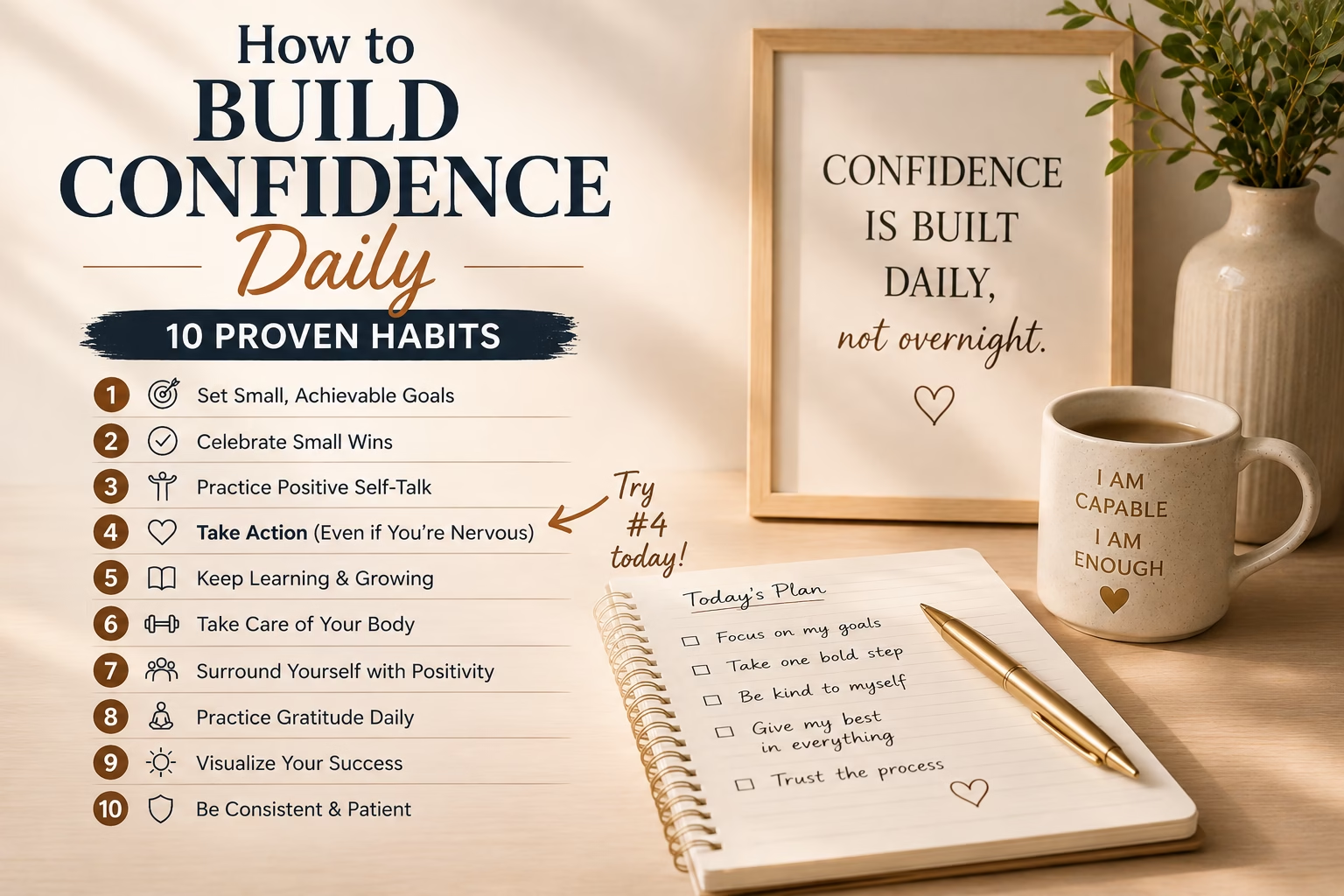
Here’s something that changed my whole perspective on how to build confidence daily: building confidence is a skill, not just some personality trait you’re stuck with. I get it; that sounds like one of those cheesy slogans you see on Instagram. But there’s an important difference between the empty promise “anyone can be confident!” and the actual science behind it. Confidence isn’t magic—it’s a neurological state your brain creates through specific behaviors. When you practice those behaviors regularly, you actually reshape that self-belief from the inside out, even if you’ve felt insecure for years.
This matters because, honestly, most people are waiting for a miracle. They want to feel confident before they do anything; they watch someone seem totally comfortable in their skin and assume that person was born lucky, already equipped with confidence. That’s not how it works at all. That mindset keeps people stuck, waiting for a feeling that only comes after you take action.
Real confidence—the kind that feels steady, not flashy; consistent no matter where you are; and grounded in actual evidence, not just performance—is something you build. It grows every day, habit by habit, like compound interest: slow at first, then faster, until it feels impossible to shake. The ten habits in this guide aren’t just random tips; they’re practical, research-backed ways to start building real confidence efficiently, no matter where you’re starting from today.
Confidence vs Self-Esteem — Why the Distinction Matters
Before we dig into the habits, let’s clear up two ideas that often get tangled together but really aren’t the same thing. If you get this difference, it changes the way you go about building them.

Self-esteem is how you judge your own worth—how much you think you deserve to be here, to have your needs met, to be treated kindly. This sense of worth usually runs pretty deep and starts early on in life.
Confidence, on the other hand, shows up depending on the situation. It’s not a general feeling. You might feel super confident about your work skills but way less sure of yourself at a party. Maybe you’re bold in one area, but shaky in another. Confidence isn’t one dial you crank up or down. Think of it more like a bunch of little switches, each one based on what you’ve done and what you’ve learned in different parts of your life.
Here’s why that matters: you don’t have to fix your whole sense of self-worth just to feel confident. You can start building confidence in one spot at a time by taking small steps, which show you that, actually, you can do it. You showed up. You made it through. You didn’t fall apart.
These ten habits are all about building up that kind of real, solid proof.
Ten Daily Habits That Build Genuine Confidence
1 – Do One Small Thing You’ve Been Dodging
This is the core habit that builds real confidence. Honestly, everything else on this list sits on top of this one. Avoidance is what keeps confidence low. Every time you dodge something uncomfortable, you train your brain to believe it’s actually dangerous. The more you avoid, the scarier it feels—while your own sense of courage shrinks.
But when you pick just one thing you’ve been avoiding and do it, you start to break that cycle. It doesn’t have to be a big gesture. You don’t need to tackle your scariest fear right out of the gate. Just pick something you’ve been putting off—maybe because you didn’t feel ready, or worried you’d mess it up, or thought you couldn’t handle it.
Maybe that means finally sending the email you keep thinking about. Maybe it’s making that call; you keep moving down your list. Maybe you speak up in a meeting, even if your voice shakes a little. Or you crack open that creative project you’ve been dreaming up, even if you only work on it for ten minutes. Every time you do something you’d usually avoid, it’s like making a deposit into your confidence bank. Every time you dodge something, you take a little out. The habit is simple, really: just decide, every single day, that you’re going to make a deposit instead.
2 – Build a Morning Practice That Puts You in Control
Here’s a simple but powerful confidence trick: claim the first hour of your morning for yourself. Before texts, before emails, before anyone else tries to claim your time—this part of the day is yours. What you do with it sets the tone. It tells you how much you value yourself.
If you roll over and immediately start scrolling, you’re letting other people’s worries and priorities set the pace for your day. That drains you before you even get out of bed. On the other hand, just 20 minutes spent moving your body, sitting quietly, writing in a journal, or following a routine that feels good—those choices fill your tank. You start from a place of strength and intention.
And here’s the thing: the boost to your confidence builds over time. Stick with starting your day this way, and you’ll notice it. That little shift each morning adds up, and eventually, you carry yourself differently. You feel it in the way you approach everything else. If you want a step-by-step framework rooted in real neuroscience to help you make this a habit, check out our guide on morning habits that change your life; it is the natural companion to this habit.
3 – Track Your Evidence of Competence
Low confidence messes with how you pay attention. It’s like your brain gets stuck on what went wrong and skips right over what actually went well. You remember the one awkward presentation but barely recall the seven that worked just fine. The one negative comment sticks, while all the positive feedback gets pushed aside.
That’s where an evidence journal comes in. Every night, jot down three moments when you showed competence—times you handled something, spoke up, created, or just got through a situation. Nothing has to be groundbreaking. Maybe you stayed levelheaded in a stressful chat. Maybe you wrapped up what you started that morning. Even asking for help goes on the list. If you do this, the journal starts to tell a different story. On tough days, you have proof that you’re capable—even when your mind tries to convince you otherwise. This isn’t about patting yourself on the back. It’s just telling the truth.
4 – Use Your Body to Shift Your Internal State (Try This Today)
Your body and mind aren’t running on separate tracks—they’re one system, always in conversation. What you do with your body shapes how you feel, just like your mental state influences how you move.
Studies in psychological science show that your posture and physical habits actually change your hormones, boost your confidence, and affect how willing you are to take risks. That kicked off a new wave of research into how body language and confidence are connected.
The simple mechanics are accessible to anyone:
Physical practices that shift your internal state toward confidence:
- Stand tall—feet about shoulder-width apart, shoulders back but relaxed, head level—for a couple of minutes before anything nerve-wracking. This cuts down on stress hormones and makes you feel more confident.
- Slow down when you talk. Most of us rush when we’re anxious, but slower, more deliberate speech actually calms you, and people see you as more confident.
- Keep genuine eye contact when you chat. Don’t stare. Just try to be present and engaged—that’s enough.
- Walk with purpose. Look ahead, lengthen your spine, and don’t rush. It sounds simple, but it’s powerful.
Just pay attention to what your body’s doing and tweak it toward a more confident posture. Honestly, your nervous system isn’t great at telling the difference between acting confident and genuinely feeling it. Turn those micro-adjustments into a habit, and you’ll notice the shift.
5 – Invest in Your Appearance With Intention (Not Vanity)
This one really hits home for Apex Aesthetic: it’s where beauty, design, and mindset all meet. Honestly, it’s one of the most overlooked ways to feel more confident day to day.
When you put real effort into how you look—not to impress anyone, just as a way to respect yourself—you feel the difference inside. It’s not just fluff, either. Northwestern University researchers have shown that what you wear, how you take care of yourself, and even the space around you all shape how you think and feel about yourself.
Intentional doesn’t mean pricey. It means you actually care.
Maybe you follow a simple skincare routine for beginners with our glow-up routine for beginners, or you’ve leveled up to a night skincare routine for glowing skin. The point is, it’s about showing up for yourself every day. Pick clothes that make you feel good, not just clothes you can get away with. Keep your surroundings tidy and pleasant, instead of letting them slide into chaos.
Taking care of your appearance isn’t just about looking good. It directly feeds your confidence from the inside. If anything, it might be one of the biggest drivers behind that inner boost.
6 – Keep Learning in Your Field
If you want to feel confident about something, you need to actually get better at it. And that takes focused learning and practice. It’s easy to say you’ll “learn more,” but that’s too vague—it never sticks. What really works is picking one thing you want to improve in one area where you want more confidence, then spending a set amount of time on it every day.
Just 15–20 minutes of real learning every single day doesn’t sound like much. But do it in your chosen field, and after three months you’ll be shocked by how much you’ve grown. Whether you commit to writing, design, finance, or anything else, this daily habit adds up fast. In 90 days, you get measurable results—you’re more skilled and you actually feel it. That’s confidence backed by real evidence. You don’t need to talk yourself into believing you’re capable. Put in the time, see your progress, and the confidence comes naturally.
7 – Choose Your Social Circle Intentionally
People around you shape more than your mood—they actually shift your idea of what’s normal. Hang out too often with folks who tear you down or who always treat themselves like they don’t matter, and suddenly that feels standard. But if you’re around those who encourage you, ask honest questions, and genuinely respect themselves, you start feeling that those things are within reach, too.
This isn’t about cutting out anyone tough to deal with. It’s about being thoughtful about who you spend the most time with.
Here’s a simple exercise:
• Find one relationship that leaves you feeling smaller every time you walk away.
• Find another that lifts you up.
• Put more energy into that second one, and start limiting how much you automatically invest in the first. And don’t forget—what you read, watch, and scroll through every day counts as your social environment, too. The accounts, media, and online groups you choose all quietly shape what you consider normal. If you curate this digital landscape like you’d pick your favorite place to live, it turns into one of the easiest, most overlooked ways to build steady confidence.
8 – Speak About Yourself With Accuracy, Not Self-Diminishment
There’s this habit a lot of people pick up—especially if their confidence has taken a few knocks. You hear it all the time in the way folks talk about themselves, almost like they’re trying to shrink or soften their presence before anyone else can. Maybe you’ve caught yourself saying things like, “I’m not an expert or anything, but…” or “This is probably a stupid question, but…” or even apologizing just for asking something small.
The thing is, using these kinds of qualifiers over and over—before anyone’s challenged us—turns into a kind of self-sabotage. Little by little, we teach the people around us (and our own nervous systems) that what we have to say matters less, even when it doesn’t.
But remember, the antidote isn’t arrogance. It’s just about being accurate—clear about what you think, what you know, what you notice, and what you need. No need to apologize up front for having thoughts or asking for something.
Try swapping out those old reflexes. Instead of “I’m probably wrong but I think…,” just say “I think…” Instead of “I don’t know if this is worth mentioning, but…,” go with “I noticed…” If you want something, skip the heavy apologies and try, “I’d like…” Talk like your words belong in the room. Trust that what you offer is worth hearing. Funny thing is, the more you do this, the more real confidence grows—faster and more solidly than almost any other trick out there.
9 – Build a Physical Environment That Boosts Your Confidence
Your surroundings aren’t just empty scenery—they constantly shape how you feel about yourself, even if you don’t realize it. If you let your space get messy or neglect its appearance, you end up reinforcing a low standard for yourself. But if you keep things tidy and make a little effort to create beauty around you, your environment tells you something different: that you respect yourself.
Don’t get hung up on luxury. You can have a tiny room, but if it’s clean and feels meaningful to you, it does way more for your confidence than a fancy apartment that’s a disaster.
Here’s one small habit that helps: spend five minutes every morning making your place reflect the person you want to be. Make your bed, clear off your desk, and put something beautiful where you’ll see it first thing. If you want deep design tips that actually help boost your confidence and clarity, check out our guide on aesthetic study room ideas at home or dig into our framework on how to find your purpose in life—they both link your physical space to the inner life you’re growing.
10 – See Self-Compassion as a Confidence Tool, Not a Consolation Prize
If you want to build real confidence, don’t overlook self-compassion. A lot of people think it’s just being soft on yourself—like lowering the bar. It’s not. In fact, Dr. Kristin Neff at the University of Texas keeps finding the same thing in her research: people who show themselves more compassion aren’t less driven. They actually have more motivation, bounce back emotionally, put things off less, and feel more secure in the long run.
Here’s why it works. When you mess up and all you do is criticize yourself, you end up feeling ashamed. And shame doesn’t make you try harder; it just makes you want to run away and avoid it all. Avoidance drains your confidence (we talked about that back in Habit 1). But people who respond to failure with understanding—who admit when things are hard, remind themselves that everyone stumbles, and speak to themselves like they would to a friend—are the ones who get back in the game faster and without all that defensive armour.
A simple daily practice: Next time something goes sideways—maybe you blew a project, got turned down, or just didn’t perform your best—pause and ask yourself, “If my closest friend felt this way, what would I say to them?” Then, say it to yourself. Don’t use it as an excuse to dodge responsibility. Use it to keep your emotional strength so you can actually keep trying. Because at the end of the day, the person who can be a little gentle with themselves is more likely to get back up and try again—and that’s how real confidence grows. If you’re too hard on yourself, you never even give yourself the chance.
A Realistic Confidence Timeline – What Months of Daily Practice Actually Produce
Let’s get real about how long it actually takes to build real confidence—because a lot of guides out there just aren’t honest about this stuff.
If you’re trying to create genuine confidence by practising daily, you’re looking at a solid 90-day commitment, at minimum. Here’s what that really feels like: The first month is rough. You show up and do the habits, but inside? It’s the same old anxiety, those nagging doubts, that urge to hide. Honestly, it feels like nothing’s happening.
That first month is all about planting seeds. The neural pathways you’re building are brand new and shaky. Everything feels like hard work. Sure, you’ll notice a handful of small wins, but nothing feels big enough to celebrate yet.
Then comes month two. Suddenly, little cracks start to show in your old patterns. Situations that would have sent you running before aren’t as scary. Out of nowhere, you catch yourself handling something that, a few weeks earlier, would have totally thrown you off. It surprises you.
By month three, the change starts to add up. People pick up on it—they respond to you differently because you’re actually showing up differently. Your voice, how you sit, how you take up space—there’s a steady calm there that wasn’t there before. And it’s not loud or showy, but it’s unmistakable: you’ve been practicing self-respect every single day, and it shows.
When you keep going—six months and beyond—something bigger shifts. At this point, it’s not just “I hope I can be more confident.” It’s simply who you are. “I’m someone who builds confidence daily” isn’t just an idea. It’s true.
None of this is a magic promise. Everyone’s journey looks a little different, and how much you change comes down to how committed and specific you are with your habits. But the science backs this up: when you actually put in the time, when you show up every day and work these habits, things shift. Maybe not overnight, but steadily and for real.
Frequently Asked Questions About How to Build Confidence Daily
Is confidence something you’re born with or something you build?
Honestly, confidence isn’t something you just inherit. Sure, some folks seem more naturally comfortable in social situations, but real confidence—especially in specific areas—comes from rolling up your sleeves and actually doing things. Neuroplasticity research backs this up: your brain adapts, no matter your age, when you practice intentionally.
Why does my confidence disappear in certain situations, even though I usually feel pretty confident?
Because confidence doesn’t work the same everywhere. You might feel like a rockstar at work but awkward or unsure at a party. That’s normal—the experiences that build your confidence in each area are different. If you want to boost your confidence in a situation where you feel shaky, you need to tackle new experiences head-on in that specific setting.
How do I stop comparing myself to others?
It’s just human nature to compare, so trying to banish those thoughts completely is a losing battle and, honestly, exhausting. What helps is switching your focus—from “How do I stack up against them?” to “How am I doing compared to where I was last month?” That way, you’re measuring progress you can actually control.
Can building confidence help with anxiety?
Yep, as you build confidence in certain areas through action and evidence, anxiety usually goes down. The two balance each other out. That said, if you’re dealing with clinical anxiety, just working on confidence probably isn’t enough. Sometimes you really need professional support too.
What’s the most important confidence habit to start with?
Do one small thing you’ve been avoiding. That’s it. Avoiding stuff kills confidence—breaking that cycle, even just once a day, starts to rewire your brain. From there, you build momentum for everything else.
CONCLUSION
How to build confidence daily is honestly the most practical thing you can do for yourself. It’s not just about feeling good, either. Confidence shapes everything—every dream, every decision, every risk you want to take but keep holding back. Maybe you’re stuck at work, dreaming about a big move but never making it. Or you crave a deeper connection with someone yet stay quiet. It could be that project you believe in but haven’t dared to share. Sometimes, you catch a glimpse of the person you want to become and wonder if it’s even possible.
But it is. You don’t stumble onto confidence by accident, and it doesn’t click into place after one magical breakthrough. Nobody hands it out to a lucky few. You have to build it, even if you’re not sure how, even if you mess up, even if you’re not in the perfect spot. The habits in this guide get you started—honestly, imperfectly, and consistently. Forget waiting for “the right time.” The right time is whenever you decide to start.
That’s right now.
Watch: Dr Kristin Neff’s TEDx Talk on self-compassion is one of the most important 19 minutes you can spend on understanding the psychological foundation of lasting confidence—genuinely transformative and freely available.
Explore the complete Apex Mindset collection—discipline, overthinking, morning habits, evening routines, procrastination, purpose, and now daily confidence-building—for the most comprehensive personal performance framework on this blog.
OUTBOUND LINKS
- Psychological Science (body-mind research)
- Northwestern University Enclothed Cognition Study
- Dr. Kristin Neff Self-Compassion Research
- YouTube – Dr. Kristin Neff TEDx Talk
INTERNAL LINKS
- Morning Habits That Change Your Life – https://apexaesthetic.blog/morning-habits-that-change-your-life/
- Glow Up Routine for Beginners – https://apexaesthetic.blog/glow-up-routine-for-beginners/
- Night Skincare Routine for Glowing Skin – https://apexaesthetic.blog/night-skincare-routine-for-glowing-skin/
- Aesthetic Study Room Ideas at Home – https://apexaesthetic.blog/aesthetic-study-room-ideas-at-home/
- How to Find Your Purpose in Life – https://apexaesthetic.blog/how-to-find-your-purpose-in-life/
- Retinol Routine for Beginners – https://apexaesthetic.blog/retinol-routine-for-beginners/
- Dark Academia Room Decor Ideas – https://apexaesthetic.blog/dark-academia-room-decor-ideas