Table of Contents
Introduction
One of the most searched outdoor topics right now is privacy plants for backyard spaces, and the numbers explain why. A professionally installed 6-foot cedar fence runs $1,800–$3,500 for 50 linear feet. Fifty linear feet of well-chosen hedge plants costs $300–$600 and looks significantly better after five years.
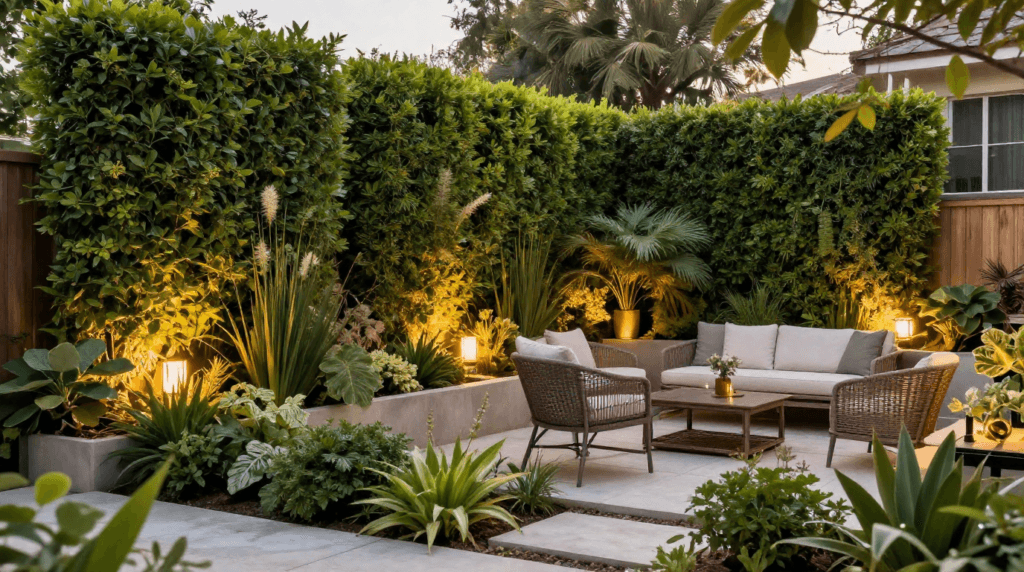
The right selection creates full, dense screening in 2–5 years, depending on species. Some fast-growing privacy plants reach a useful height in a single season. Most require zero maintenance beyond light shaping once established.
Here are 11 options that genuinely work — from evergreen hedges that screen year-round to ornamental grasses that fill gaps quickly and at very low cost.
Why plants outperform fences for backyard privacy
Cost is the obvious reason. But longevity and adaptability matter too.
A timber fence degrades. Posts rot, panels warp, and the stain fades. After 10–15 years, most wooden fences need partial or full replacement. A well-chosen hedge plant keeps growing for decades with minimal ongoing cost.
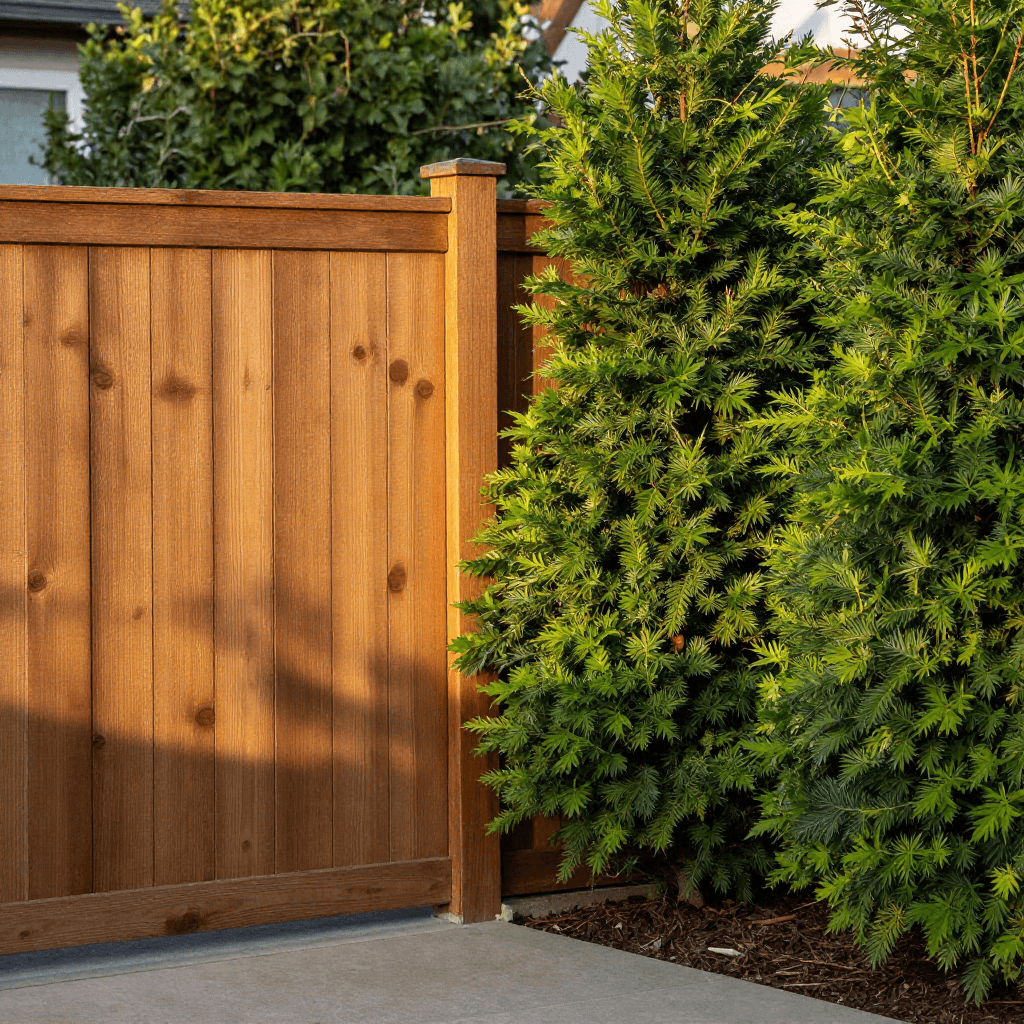
According to the USDA Forest Service, strategically placed trees and shrubs can reduce household heating and cooling costs by 10–30%, depending on the climate. Evergreen plants create effective windbreaks that measurably reduce the penetration of cold wind in winter. Deciduous trees block summer sun and let winter light through — something a solid fence can’t do.
Plants also handle irregular property lines, sloped ground, and awkward corners far better than fence panels. And in many jurisdictions, planting schemes qualify for local council grants and biodiversity schemes that fence installations don’t.
What to check before you buy privacy hedge plants
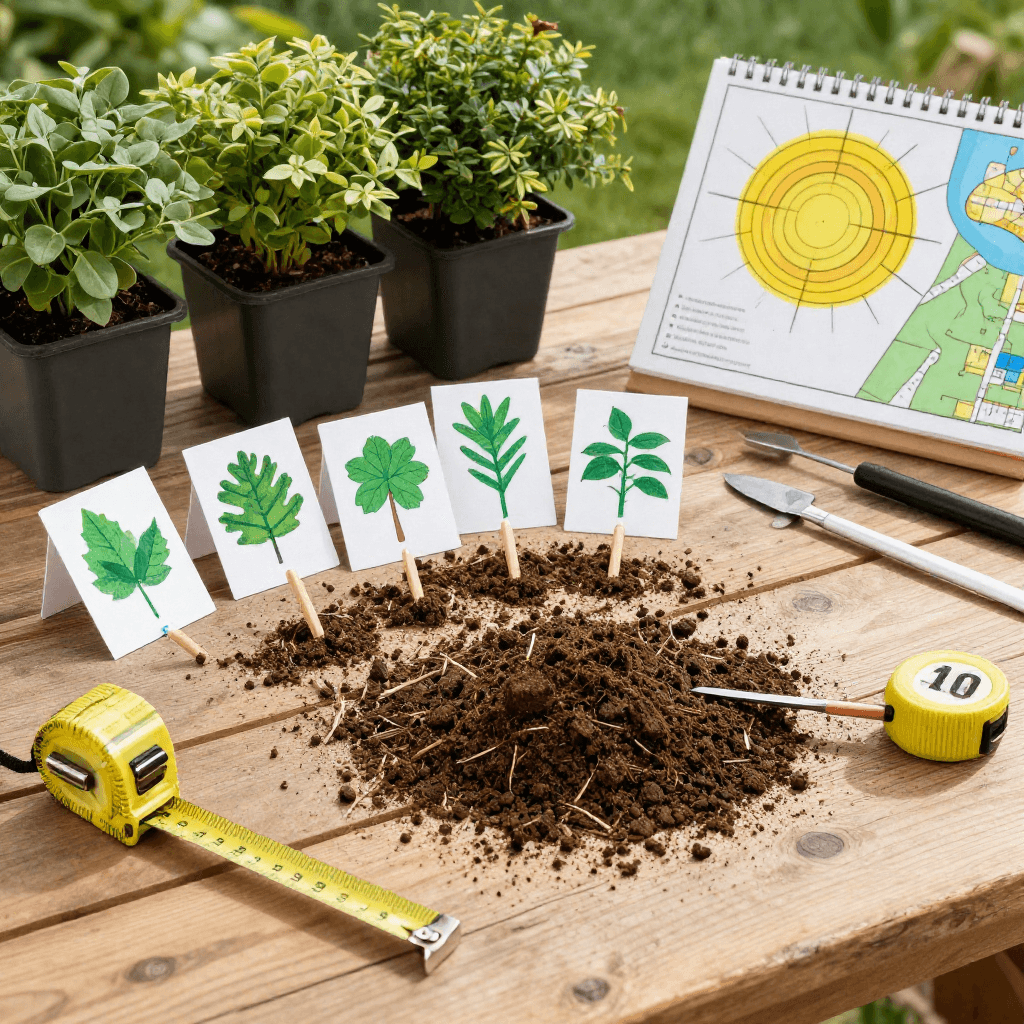
Mature width: Most privacy hedge plants need 3–6 feet of horizontal space at maturity. Check the mature width on the label before purchasing—it’s easy to underestimate, and plants placed too close together create problems a few years in.
Sunlight: Most fast-growing privacy plants perform best in full sun. Cherry laurel, skip laurel, aucuba, and several hollies tolerate deep shade — useful for north-facing gardens or heavily shaded boundaries.
Soil drainage: Standing water kills most hedge plants within a season. Test drainage before planting: dig a 12-inch hole, fill it with water, and check back in an hour. If water still stands, add organic matter to the bed before planting, or choose a more water-tolerant species.
Local invasiveness: Bamboo in particular spreads aggressively underground in warmer climates. Always check your regional invasive plant list before planting fast-spreading species. Clumping varieties of bamboo avoid this problem, but confirm the specific cultivar before buying.
11 privacy plants for backyard spaces
1. Thuja Green Giant (Thuja standishii × plicata)
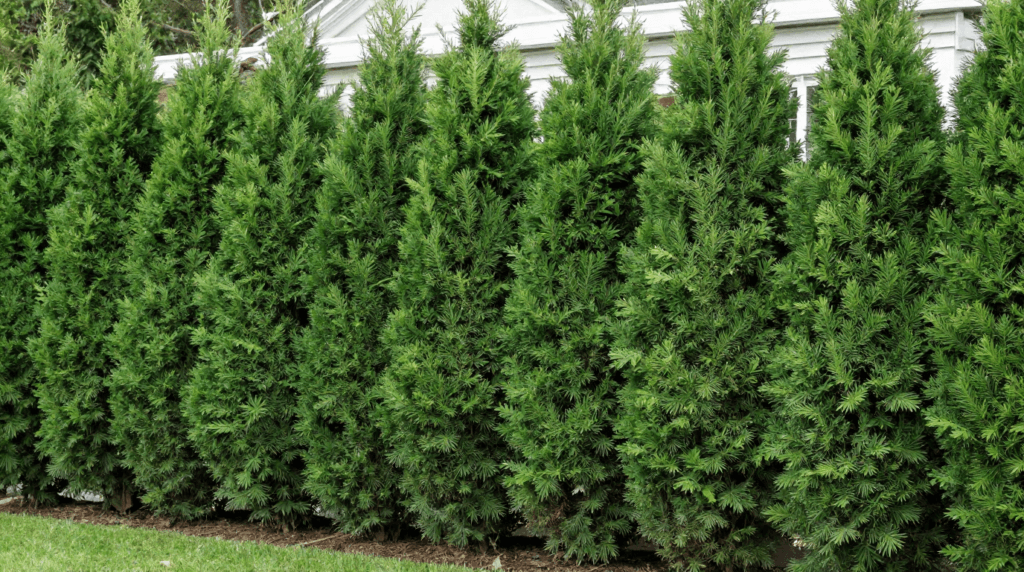
The most recommended fast-growing privacy plant in North America – and for good reason. Thuja Green Giant grows 3–5 feet per year when young and reaches 30–40 feet at full maturity, though most gardeners maintain it at 8–15 feet with annual trimming.
It’s evergreen, deer-resistant, handles drought after its first two seasons, and doesn’t suffer from the disease issues that affect some other conifers. Space plants 5–6 feet apart for solid screening in 2–3 years. A 3-gallon plant from a garden centre costs roughly $20–$35.
- Growth rate: 3–5 feet per year
- Mature height: 30–40 feet (easily maintained at 8–15 feet)
- Sun: Full sun
- Hardiness: USDA zones 5–9
2. Leyland Cypress (× Cuprocyparis leylandii)
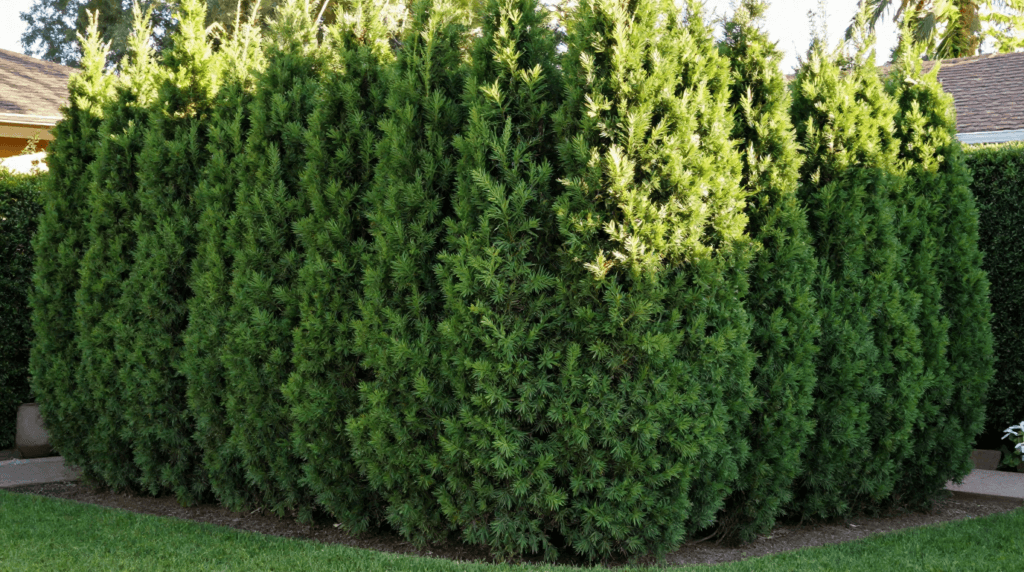
One of the fastest-growing evergreens available, 3–4 feet per year in good conditions. Widely planted across the UK for privacy screening, though its speed creates management challenges if left untrimmed. Annual cutting keeps it at a useful height and prevents the neighbour disputes that unkempt Leyland hedges are notorious for.
For gardeners who want the fastest possible coverage and are willing to trim once a year, it’s one of the most effective evergreen privacy plants available. Space 6–10 feet apart.
- Growth rate: 3–4 feet per year
- Mature height: 60–70 feet unmanaged (trim to 10–15 feet annually)
- Sun: Full sun to partial shade
- Hardiness: USDA zones 6–10 / UK all zones
3. Cherry Laurel (Prunus laurocerasus)
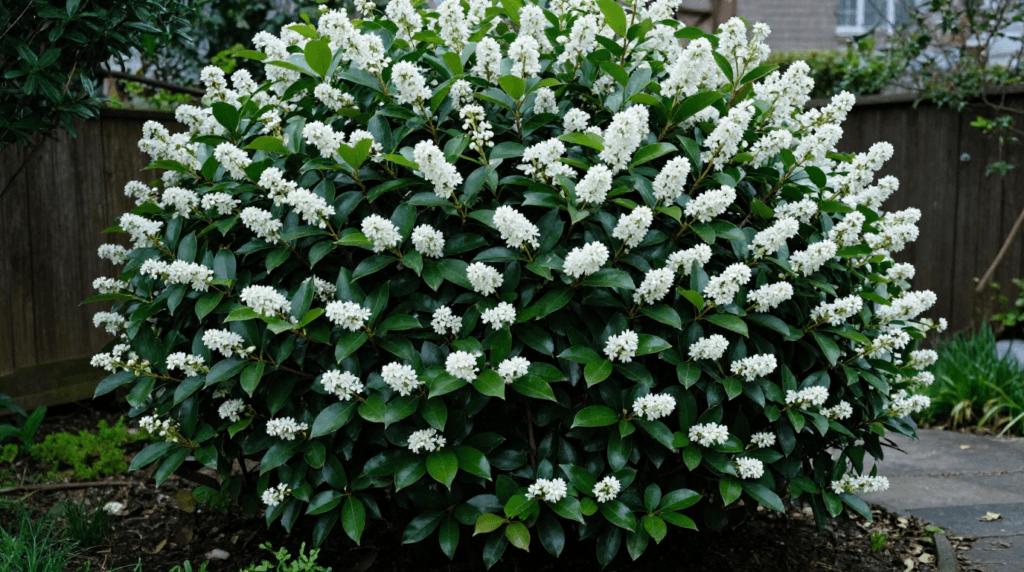
The feature that separates cherry laurel from most fast-growing privacy plants is shade tolerance. It thrives where conifers struggle—deep shade, clay soil, north-facing positions—and still grows vigorously.
Dense, broadleaf evergreen foliage. White flower clusters in spring. Dark berries in autumn. It reaches 10–18 feet at maturity and responds well to hard pruning, which means you can maintain it at any height from 4 feet upward. Space plants 3–5 feet apart for a solid hedge in 3–4 years.
- Growth rate: 1–2 feet per year
- Mature height: 10–18 feet
- Sun: Full sun to full shade
- Hardiness: USDA zones 6–9 / UK all zones
4. Emerald Green Arborvitae (Thuja occidentalis ‘Smaragd’)
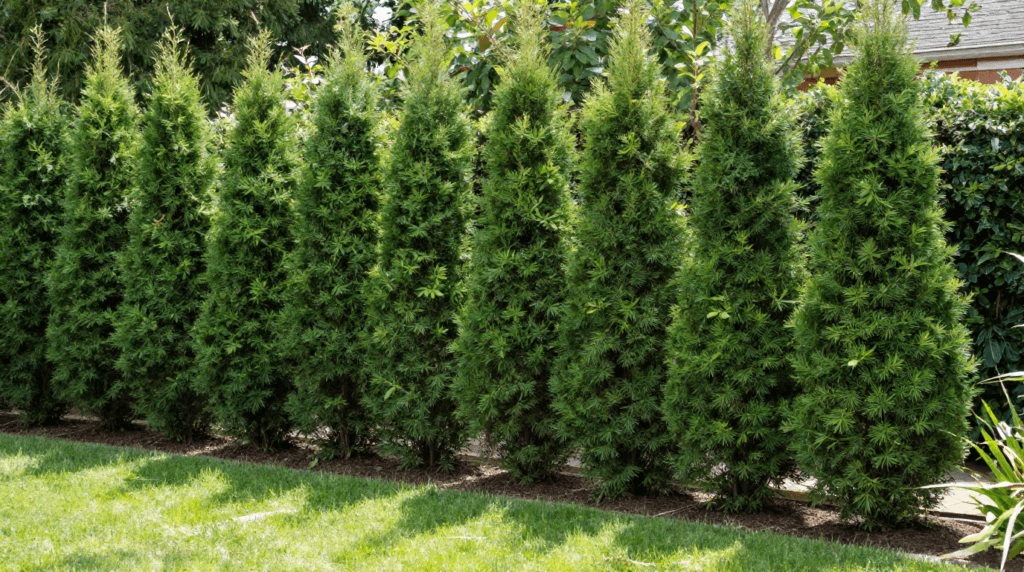
A narrower, slower alternative to Thuja Green Giant — and often the better choice for small backyards with limited width. Emerald green grows in a tight pyramidal shape: 12–14 feet tall and just 3–4 feet wide. No trimming required to hold that shape.
It’s one of the cleanest outdoor privacy plants for small yard situations. Handles most soil types, stays deep green through winter, and is extremely low-maintenance after its first season. Good choice if a neat, formal look is the goal.
- Growth rate: 6–9 inches per year
- Mature height: 12–14 feet
- Width: 3–4 feet
- Sun: Full sun to partial shade
- Hardiness: USDA zones 3–8
5. Skip Laurel (Prunus laurocerasus ‘Schipkaensis’)
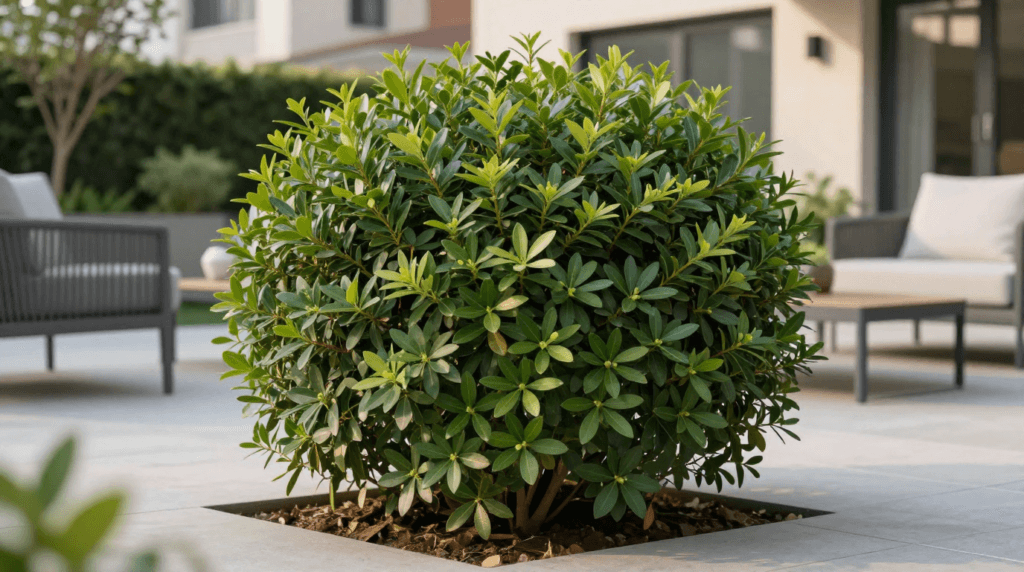
A compact, adaptable version of cherry laurel. Skip laurel grows 8–10 feet tall, 5–7 feet wide, tolerates full shade, and handles clay soil better than most hedge plants. It’s widely considered one of the easiest, fast-growing privacy plants for small yards and urban gardens.
Excellent pollution tolerance makes it a practical choice for gardens near roads or city centres. Space plants 4–5 feet apart for a solid hedge in 3–4 years.
- Growth rate: 1–2 feet per year
- Mature height: 8–10 feet
- Sun: Full sun to full shade
- Hardiness: USDA zones 5–9
6. English Laurel (Prunus laurocerasus — standard species)
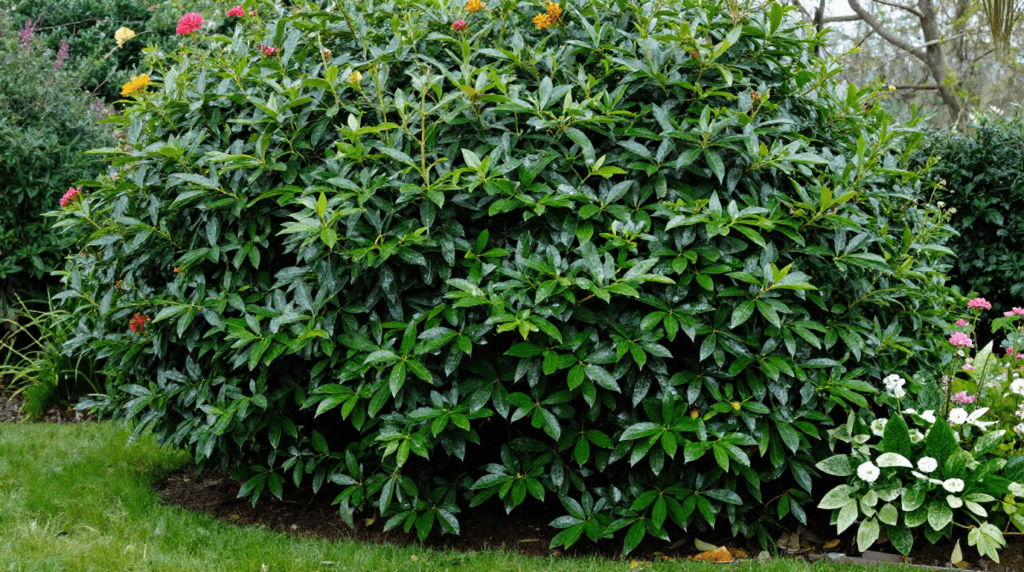
Larger and faster-growing than skip laurel. English laurel reaches 20–30 feet at full maturity and grows strongly in UK conditions. Heavy pruning keeps it manageable at 8–12 feet. Plant 4–6 feet apart for a fast-screening hedge.
It performs reliably in wet, shaded, clay-heavy conditions where many other plants fail—which is exactly why it’s one of the most common privacy hedge plants across British gardens. White flowers in April attract early pollinators.
- Growth rate: 1.5–2 feet per year
- Mature height: 20–30 feet (maintainable at 8–12 feet)
- Sun: Full sun to shade
- Hardiness: USDA zones 7–9 / UK all zones
7. Clumping Bamboo (Fargesia species)
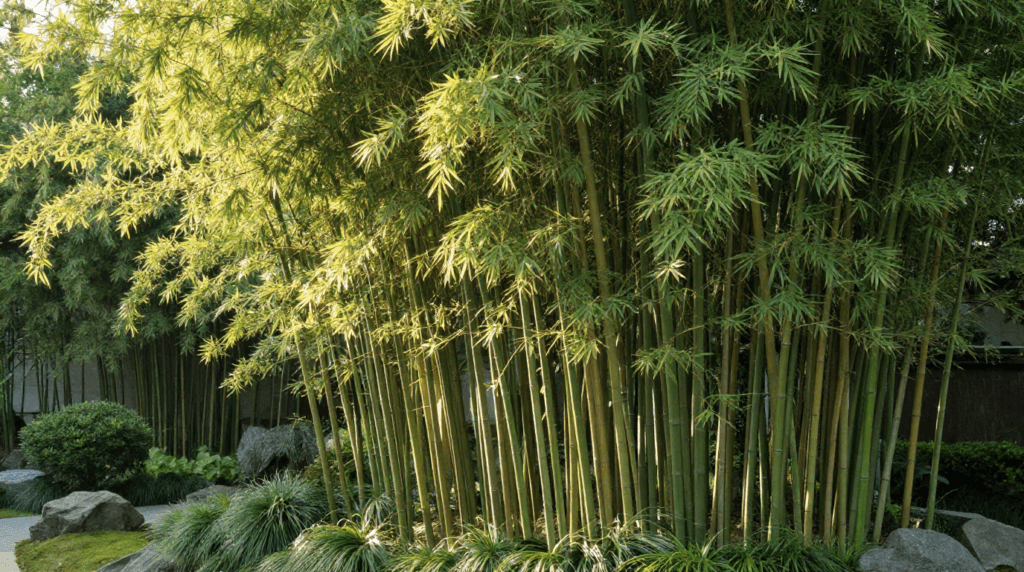
Bamboo is the fastest-growing screening plant available, but running bamboo (Phyllostachys genus) spreads aggressively underground and is considered invasive in many regions. Always choose clumping bamboo, which stays contained without underground root barriers.
Fargesia robusta ‘Campbell’ and Fargesia murielae ‘Jumbo’ are two of the most effective clumping varieties for UK and mild US climates. They reach 12–15 feet in 3–4 years, form a genuinely dense screen, and require no pruning to maintain their shape. The rustling of bamboo in the wind adds a sound dimension to privacy screening that no fence can replicate.
Once your privacy screen is planted, lighting it at night transforms the whole garden. See our outdoor solar lighting ideas guide for how to make a planted screen glow after dark.
- Growth rate: 2–4 feet per year (clumping varieties)
- Mature height: 12–15 feet
- Sun: Full sun to partial shade
- Hardiness: Varies by variety — check label
8. Photinia Red Robin (Photinia × fraseri ‘Red Robin’)
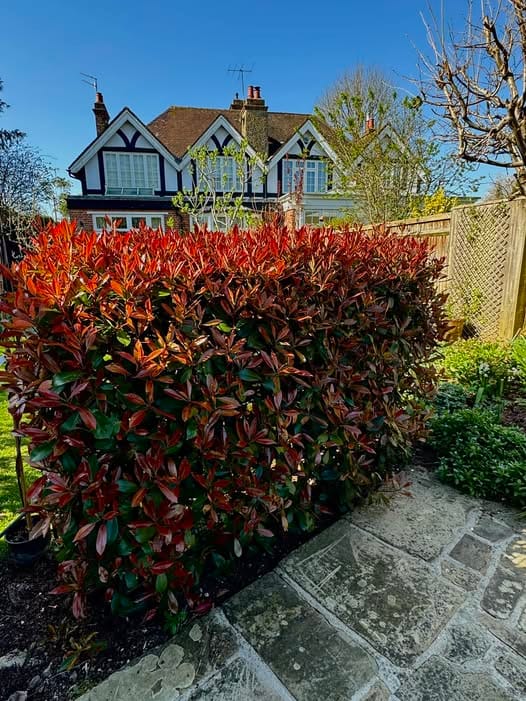
Popular in UK gardens primarily for the vivid red new growth that appears in spring and early summer. As a backyard privacy plant, it’s solid, dense, and maintains good year-round screening. As an ornamental, it’s among the most attractive options available.
Reaches 8–12 feet at maturity and responds strongly to pruning, which is worth knowing because pruning triggers fresh red growth. Space plants 3–5 feet apart. Full sun delivers the most intense red colouration; shade reduces it significantly.
- Growth rate: 1–2 feet per year
- Mature height: 8–12 feet
- Sun: Full sun (partial shade tolerated)
- Hardiness: USDA zones 7–9
9. Miscanthus Sinensis (Ornamental Grass)
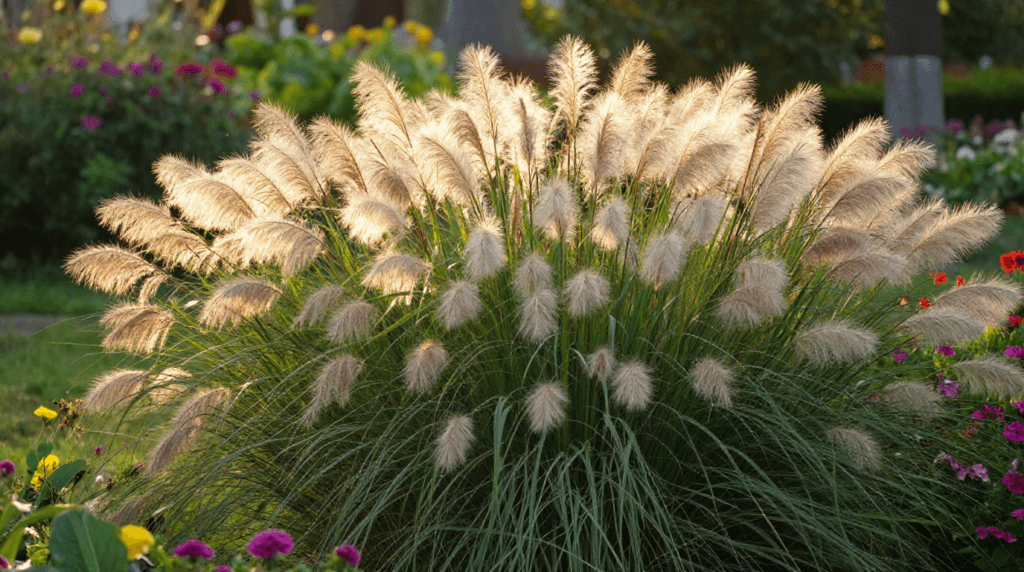
The most underused seasonal privacy plant for small backyards. Miscanthus sinensis grows 4–8 feet in a single season, dies back in winter, and regrows from the base the following spring. A row planted 3 feet apart creates effective summer screening — exactly during the months when you’re actually using the garden.
It costs very little (a 1-gallon plant runs $5–$15), fills out remarkably fast, and has excellent visual appeal. The feathery plumes that appear in late summer add movement and texture that evergreen hedges don’t provide. Combine it with evergreen plants for year-round coverage: Miscanthus handles summer, and the evergreens handle winter.
- Growth rate: 4–6 feet in a single season
- Mature height: 4–8 feet (dies back in winter)
- Sun: Full sun
- Hardiness: USDA zones 4–9
10. Leatherleaf Viburnum (Viburnum rhytidophyllum)
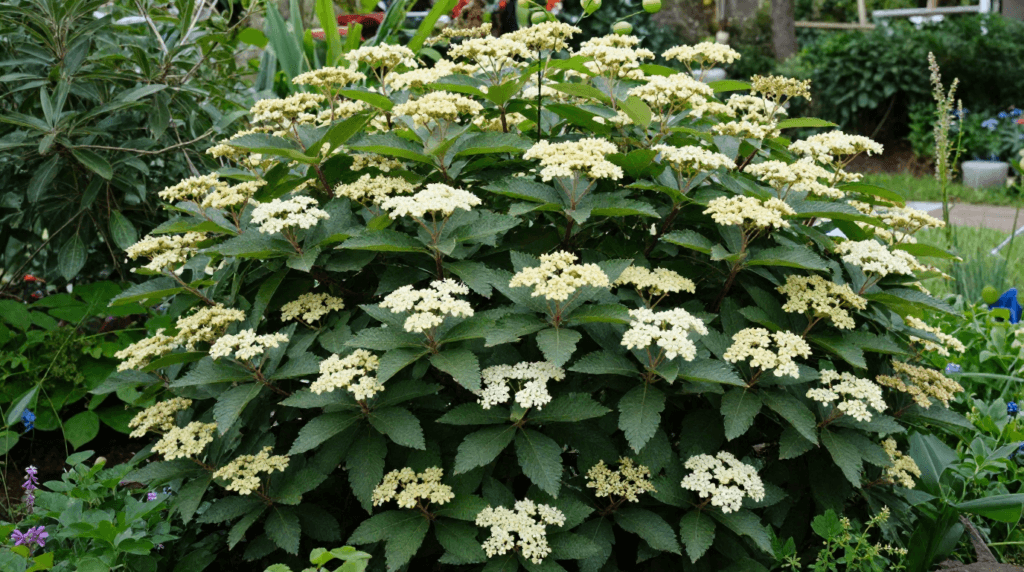
A large-leafed evergreen viburnum with bold, textured foliage, cream spring flowers, and a completely different character from conifer hedges. Useful where a softer, more naturalistic appearance fits better than a formal clipped line. Grows 8–15 feet tall and handles partial shade well.
Dense enough to provide real privacy at maturity, and the coarse leaf texture reads well from a distance. Less commonly planted than laurels or conifers, which makes it a good choice for gardens where you want something a little less standard.
- Growth rate: 1–2 feet per year
- Mature height: 8–15 feet
- Sun: Full sun to partial shade
- Hardiness: USDA zones 5–8
11. Holly (Ilex species)
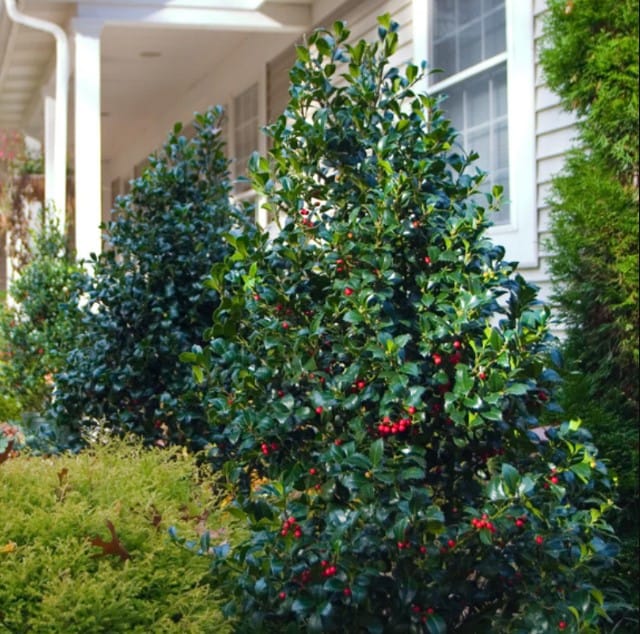
Several holly varieties work as effective evergreen privacy plants—Ilex × meserveae (blue holly) and Ilex crenata (Japanese holly) are both dense, respond well to shaping, and take on a formal character that suits contemporary garden design. Holly also produces berries that feed birds through winter, adding wildlife value alongside privacy.
Space 3–4 feet apart for a solid hedge at 6–10 feet. Slower than most others on this list but exceptionally long-lived—a well-placed holly hedge lasts decades with minimal intervention.
- Growth rate: 6–12 inches per year
- Mature height: 6–15 feet, depending on variety
- Sun: Full sun to partial shade
- Hardiness: Zones 3–9 depending on variety
How many plants do you need for a privacy hedge?
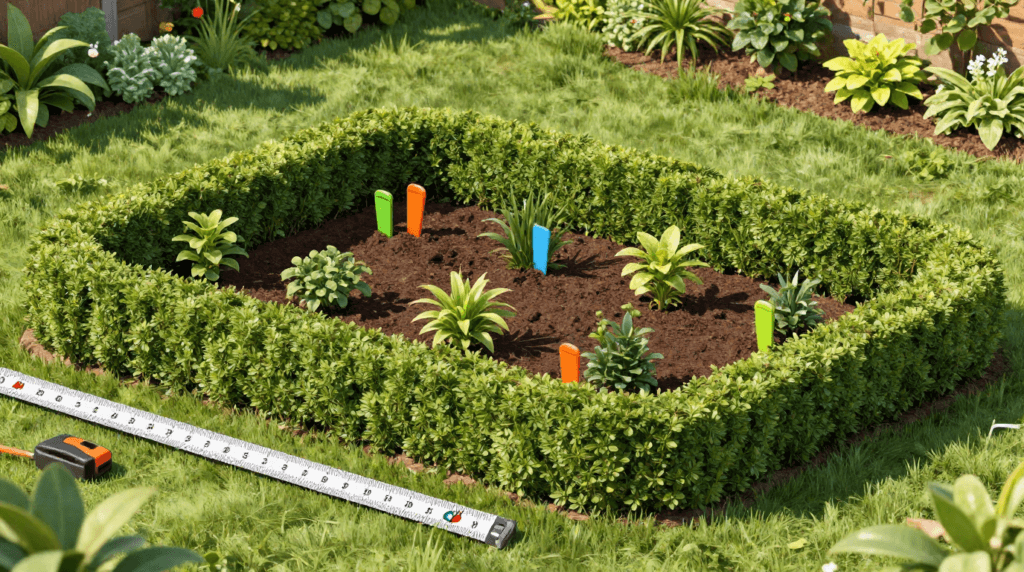
Use this as a rough starting guide. Actual spacing depends on how quickly you want screening and your budget.
| Plant | Spacing | Plants per 10 ft | Approximate time to full screen: |
| Thuja Green Giant | 5–6 ft | 2 | 2–3 years |
| Leyland Cypress | 8–10 ft | 1–2 | 2–3 years |
| Cherry / English Laurel | 3–5 ft | 2–3 | 3–4 years |
| Emerald Green Arborvitae | 3–4 ft | 3 | 4–5 years |
| Skip Laurel | 4–5 ft | 2 | 3–4 years |
| Clumping Bamboo | 3–4 ft | 3 | 2–3 years |
Closer spacing = faster screening but higher upfront plant cost. For budget-conscious planting, space at the wider end and accept a slightly longer wait.
When is the best time to plant backyard privacy plants?
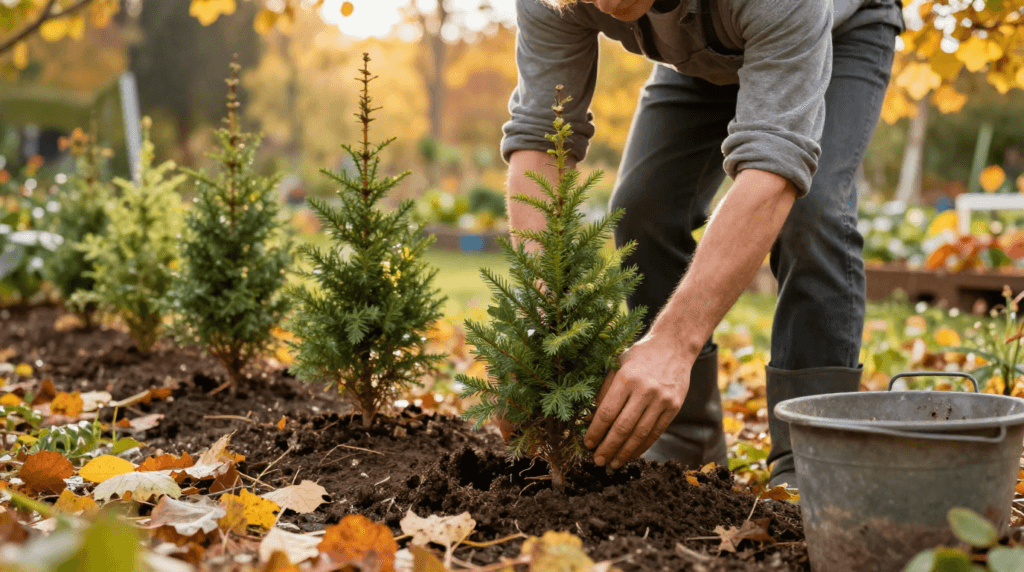
Autumn and early spring are the best planting windows for most hardy hedge plants. Soil temperature stays warm enough to encourage root establishment while the plant experiences minimal stress from summer heat.
Container-grown plants — what you’ll find at most garden centres — can be planted year-round in mild climates. Bare-root plants, available through online nurseries and typically 40–50% cheaper than container plants, should go in between late November and early March while they’re dormant.
Water thoroughly at planting. Water again every 2–3 days for the first month, then weekly through the first full summer. After one full season of establishment, most fast-growing privacy plants need no supplemental watering in temperate climates.
How do you care for a privacy hedge once established?
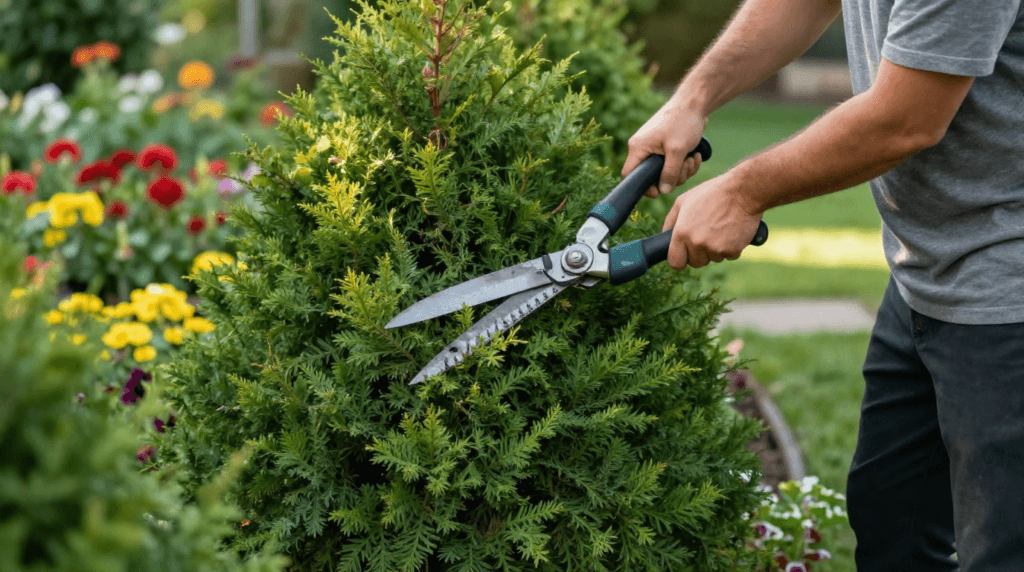
Most evergreen privacy hedge plants need just one annual prune in late summer or early autumn after the main flush of growth. Avoid pruning in spring when birds may be nesting.
Use clean, sharp hedging shears for a neat finish. Electric hedge trimmers work well for larger hedges. Cut back to the same point each year to maintain density at the base—hedges that are only ever cut at the top develop a bare, leggy base over time.
Feed established hedges once a year in spring with a balanced slow-release fertiliser. A light mulch around the base — 2–3 inches of wood chip or composted bark — retains moisture and suppresses weeds at the base of the plants.
Watch: 9 Plants I’ll Always Use For Privacy (No Fence Needed)
A practical visual guide covering fast-growing privacy plant choices, planting techniques, and before-and-after results from a working horticulturalist.
▶ 9 Plants I’ll ALWAYS Use for Privacy (No Fence Needed)
FAQ: Privacy plants for backyard spaces
Which privacy plant grows the fastest?
Thuja Green Giant grows the fastest among manageable, reliable privacy plants at 3–5 feet per year. Leyland cypress matches that speed but needs more aggressive annual pruning. Clumping bamboo can outpace both in warm climates.
How close to a fence line can I plant privacy plants?
At least 2–3 feet from any boundary or fence to allow for root spread and air circulation. For large-growing plants like Thuja Green Giant or Leyland cypress, leave 4–6 feet from any fence or structure to account for trunk width and root spread at maturity.
What privacy plants work in full shade?
Cherry laurel, skip laurel, English laurel, aucuba japonica, and several holly varieties all perform well in full or heavy shade. Most conifers—Thuja, Leyland cypress, and arborvitae—need at least partial sun to grow at a useful rate.
Do I need planning permission to plant a privacy hedge in the UK?
In most cases, no. Planting on your own property generally doesn’t require permission. The Anti-Social Behaviour Act 2003 (Part 8) does give local councils authority to require hedges over 2 metres to be cut back if they cause unreasonable loss of light to neighbours. Check your local authority guidelines before planting species likely to exceed 2 metres near a boundary.
What is the best privacy plant for a small, narrow yard?
Emerald Green Arborvitae. It grows to 12–14 feet tall and stays just 3–4 feet wide, with no pruning needed to maintain that shape. Skip laurel works well for small, shaded yards. Miscanthus ornamental grass is the most affordable option for seasonal summer screening in tight spaces.
Sources
- USDA Forest Service, Urban Forest Effects
- RHS Plant Finder
- University of Florida IFAS Extension
- Anti-Social Behaviour Act 2003, Part 8
Once you’ve created a natural privacy screen, consider adding a productive and attractive gardening feature to complete your outdoor space. Our guide on Raised Garden Bed Ideas for Small Yards shares creative layouts, DIY designs, and space-saving solutions that work perfectly alongside privacy hedges and screening plants, helping you build a backyard that is both beautiful and practical.
Conclusion
Privacy plants are an affordable and flexible alternative to traditional fences, offering natural screening that becomes more effective over time. Several factors, including growth rate, tolerance to sun, and mature size, are used to determine the proper species for the job to ensure adequate coverage without crowding. Whether you’re after quick-growing evergreens, shade-tolerant shrubs, or ornamental grasses, there are a variety of plants that can help you create a perennial privacy solution for diverse garden conditions.